
How long does Invisalign take depends on the starting position of the teeth, the bite, and the number of movements required. Mild corrections may be completed within several months, while complex cases can require 18–24 months or longer.
An accurate timeline can only be established after an orthodontic examination and digital scan.
For many patients, Invisalign treatment takes approximately 12–18 months. This is an average range rather than a guaranteed timeline for every patient.
A limited correction may take around 4–6 months. Moderate crowding, multiple gaps, and bite problems can extend treatment to 12–24 months.
The number and type of required tooth movements have a greater effect on treatment time than the visible appearance of the teeth. A problem that looks minor from the front may involve root position or bite contacts that require additional correction.
Type of case | Approximate treatment time |
Very small correction or limited orthodontic relapse | 4–6 months |
Mild crowding or small gaps | 6–9 months |
Moderate crowding and several rotations | 9–15 months |
Moderate bite correction | 12–18 months |
Severe crowding or complex tooth movements | 18–24 months |
Highly complex or combined treatment | More than 24 months |
A mild Invisalign case may involve a small gap, one or two slightly rotated teeth, or limited movement after previous orthodontic treatment. Because fewer movements are required, the treatment may use a shorter sequence of aligners.
A short plan does not mean that the aligners can be worn for fewer hours. Patients are normally instructed to wear them for approximately 20–22 hours each day.
The bite must still be assessed, even when the visible correction is small. Moving one tooth without checking its contact with the opposing teeth could affect the stability of the result.
When several teeth overlap slightly or there are small spaces between them, treatment may take approximately 6–9 months. The exact time depends on how much space must be created and the direction in which each tooth needs to move.
In selected cases, the orthodontist may recommend carefully controlled reduction between certain teeth. This creates a small amount of space without removing a tooth, but it must be based on precise measurements.
Closing a gap also involves more than moving the visible crowns of the teeth closer together. The roots should be positioned correctly to support a stable final result.
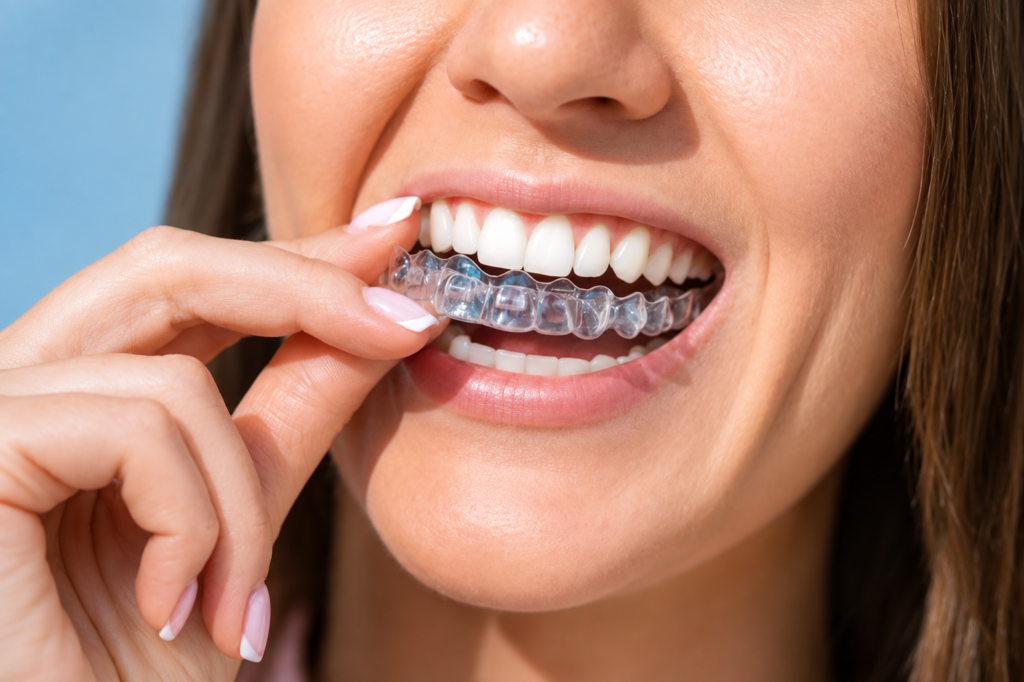
Moderate cases may include crowding in both arches, several rotated teeth, or a combination of spacing and alignment problems. These plans usually require more stages and greater control over individual tooth movement.
Small tooth-colored attachments may be placed on selected teeth. They help the clear aligners grip the teeth and apply force in the planned direction.
The number of attachments does not necessarily indicate how severe a case is. Their position and shape are selected according to the specific movement required from each tooth.
Invisalign may be used for selected overbites, open bites, crossbites, and other unbalanced contacts. These cases generally require more time than correcting the alignment of a few front teeth.
The upper and lower teeth must move in a coordinated sequence. Orthodontic elastics may also be used to support correction of the relationship between the arches.
Treatment should not stop simply because the front teeth appear straight. The final bite must provide suitable contacts during closing and jaw movement.
Read about the benefits of straight teeth beyond appearance to understand why orthodontic planning must also consider function and oral health.
Severe crowding, extensive rotations, significantly displaced teeth, and complex bite problems require more individual movements. Treatment may therefore last 18–24 months or longer.
Space may need to be created before some teeth can move into their final positions. This can be performed gradually or combined with other orthodontic procedures.
Invisalign can manage many advanced problems, but it is not automatically the best system for every patient. The orthodontist may recommend fixed or alternative orthodontic treatment when it offers better control.
Patients with significant misalignment can also read our guide to Invisalign treatment for complex cases.
Photographs can support an initial online assessment, but they do not show root position, supporting bone, or every bite contact. They are therefore not sufficient for establishing the final treatment time.
A complete evaluation may include:
After reviewing this information, the orthodontist can estimate the initial number of aligners and the expected duration of active treatment.
Each clear aligner is designed to complete a small part of the planned movement. Once its scheduled wear period has been completed, the patient proceeds to the next aligner in the sequence.
A change may be planned every 7, 10, or 14 days. The orthodontist selects the schedule according to the movement, treatment stage, and the way the teeth are responding.
A plan containing 30 aligners changed every 10 days does not automatically finish after exactly 300 days. The complete timeline may also include appointments, corrections, replacement aligners, and an additional finishing phase.
The teeth may not reach every planned position after the first series. This does not automatically mean that treatment has failed.
The orthodontist can perform a new scan and order another sequence to complete the remaining movements. This stage may add several weeks or months to the original timeline.
Additional aligners are particularly useful for finishing rotations, closing residual spaces, and improving bite contacts. They should be considered when discussing the realistic total treatment time.
A plan involving many teeth, roots, and bite corrections normally takes longer than a limited alignment change. The distance a tooth moves is only one part of the calculation.
Clear aligners work while they are correctly seated over the teeth. Frequently removing them or wearing them only at night can prevent the teeth from following the planned sequence.
Moving to the next aligner early does not safely accelerate treatment. Each stage needs sufficient time to complete before the next one begins.
Appointments allow the orthodontist to check whether the aligners fit and whether the teeth are tracking correctly. Delayed visits can postpone the identification of a problem.
A missing aligner can interrupt the sequence. Patients should contact the clinic rather than deciding independently whether to use the previous or next one.
Untreated decay, gum inflammation, or inadequate oral hygiene can interrupt orthodontic care. Active dental problems should be controlled before or during treatment.
Age alone does not determine the treatment time. Teenagers may respond well biologically, but they still need to wear the aligners consistently and follow the prescribed schedule.
Adults can also achieve successful tooth movement when their teeth, gums, and supporting bone are healthy. Existing periodontal or restorative problems may need to be addressed before treatment begins.
For younger patients, the eruption of permanent teeth and jaw development can affect planning. Parents can read our guide to the right age for braces or Invisalign.
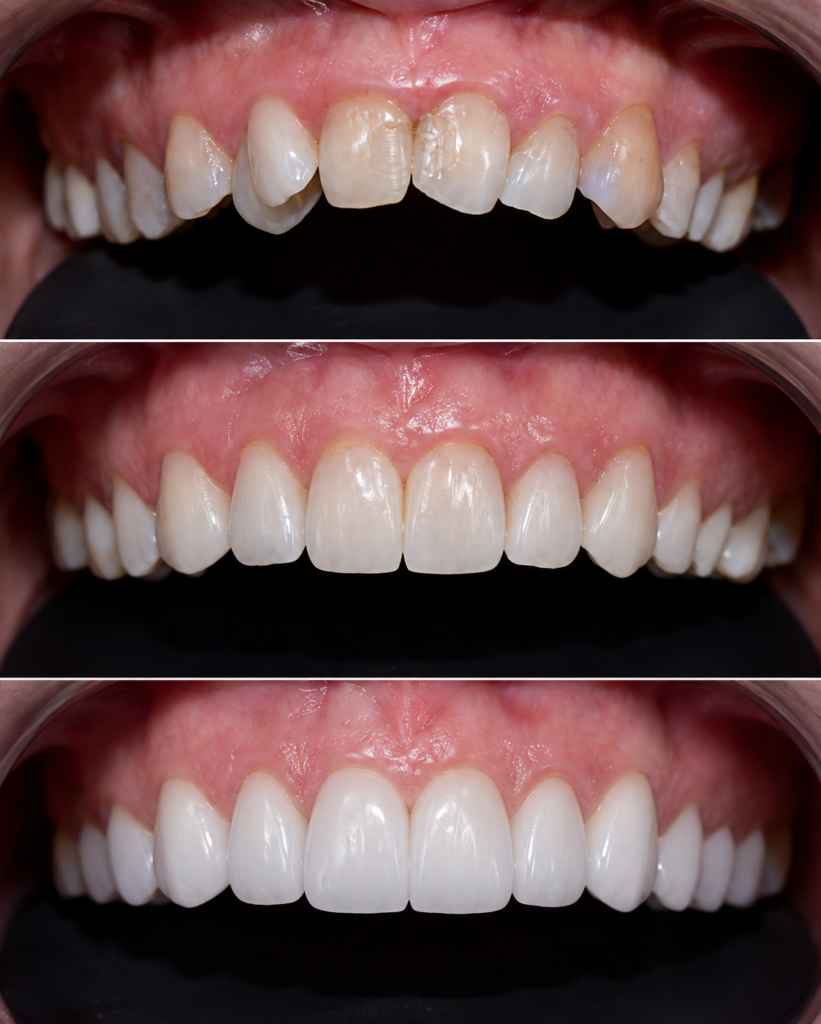
Some patients notice early changes within the first few weeks, especially around the front teeth. Other movements happen further back in the mouth and are less immediately visible.
Visible improvement does not mean that the roots and bite have reached their final positions. Treatment should continue until the orthodontist confirms that the clinical objectives have been completed.
Comparing the current teeth with photographs or digital scans taken at the beginning can make gradual progress easier to see.
Patients should not change aligners early or use unapproved methods to force faster movement. Teeth and supporting tissues need sufficient biological time to respond safely.
The most effective way to remain within the estimated timeline is to avoid preventable interruptions:
These steps do not guarantee a shorter treatment, but they help prevent avoidable delays.
Once active tooth movement is complete, the result must be maintained. The orthodontist provides a retainer to limit the natural tendency of teeth to shift after treatment.
Retention is not usually counted as part of active Invisalign treatment time. However, it is an essential part of protecting the result.
The required schedule varies between patients. Some retainers are initially worn for longer periods before transitioning to nighttime use, according to the orthodontist’s instructions.
Yes, selected mild cases may be completed in approximately 4–6 months. Patients requiring substantial bite or root correction normally need more time.
Not necessarily. Wearing them as instructed keeps the plan on schedule, but tooth movement still requires biological time.
Nighttime wear alone usually does not provide the required daily hours. The aligners may stop fitting correctly and the treatment can be delayed.
Only when instructed by the orthodontist. Changing early may prevent the teeth from completing the current movement.
The schedule depends on the case and treatment stage. Reviews are used to examine fit, progress, oral health, attachments, and bite contacts.
Not every patient requires them, but additional aligners are common when small movements remain. A new scan determines what corrections are still necessary.
It is not normally counted as active tooth movement. Retention begins after alignment and is necessary to maintain the result.
No single system is ideal for every patient. Fixed appliances or combined treatment may be recommended when they provide more suitable control.
It can. The patient should contact the orthodontist promptly and avoid choosing the next step without clinical instructions.
An individual orthodontic assessment is the only reliable way to estimate how long your Invisalign treatment may take. At City Dental Clinic, the plan is based on the position of the teeth, bite relationship, oral health, and required movements.
Your consultation may include:
Contact City Dental Clinic at +355 68 510 7070, email info@cdc.com.al, or visit us at Rruga “Siri Kodra,” Building No. 13, Entrance No. 1, Tirana, Albania.

