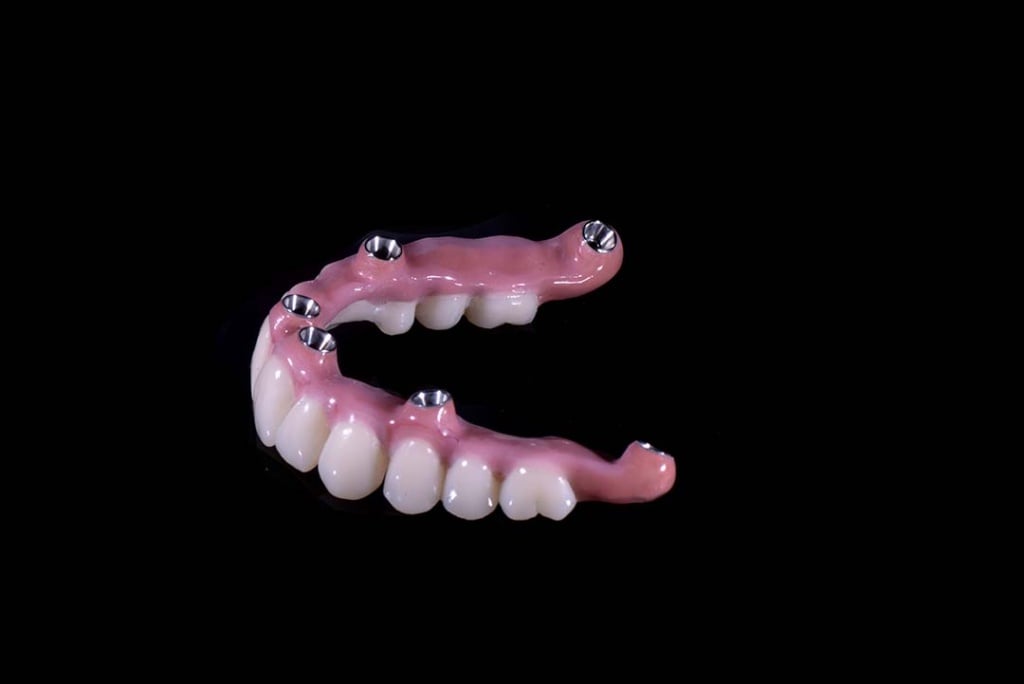
The pterygoid implant engages in three types of bones (maxillary tuberosity of the jaw, pyramidal process of the palatine bone, pterygoid process of the sphenoid bone) which are located in the most posterior area of the upper jaw. These bones are not a subject of resorption such as the jaw bone does, so this site is always a possibility to place a dental implant in the patients that are suffering a bone loss in the upper jaw.
Over and above that, pterygoid implants are special and unique for their length, because they are much longer than conventional implants. In that manner, pterygoids are of 15 to 25 mm, a length which was designed in order to ensure an appropriate anchorage in the bone.