
Failed dental treatment correction is important for every patient who had dental work before and is not happy with the result. Failure does not always mean the problem has no solution. In many cases, the most important step is a new diagnosis and a carefully built plan.
At City Dental Clinic, every case is reviewed calmly, with clinical analysis and diagnostic technology. The goal is not only to repair what is visible. The goal is to understand why the first treatment failed.
A dental treatment can be considered unsuccessful when it does not provide good function, aesthetics or stability. The patient may feel pain, discomfort, movement of the restoration or dissatisfaction with the smile. Sometimes the problem is small, but sometimes it requires complete replanning.
Failure can happen with:
A patient should not immediately blame themselves or think there is no solution. Modern dentistry offers many ways for failed dental treatment correction. The key is not to repeat the same mistake.
Many treatments fail because the first diagnosis was not detailed enough. If the problem is seen only on the surface, the treatment may solve only the symptom. The main cause remains active and damages the result over time.
For example, a tooth may be covered with a crown, but the root below may still have infection. An implant may be placed, but the bone and gum tissue may not have been evaluated well. A smile may become whiter, but the tooth shape may not fit the face.
A complete diagnosis may include:
When these steps are missing, the treatment may look good at first. Later, pain, inflammation or material fracture may reveal the real problem.
The bite is one of the most underestimated reasons for dental treatment failure. If forces are not distributed well, even a very beautiful crown can break. Even a well placed implant can become overloaded.
Patients often think only about tooth colour and shape. Dentists must also check how the teeth meet during chewing. This is very important for long term results.
Signs that the bite may be a problem include:
Failed dental treatment correction often starts with bite adjustment. Sometimes a small correction is enough. In other cases, a larger restorative or orthodontic plan is needed.
A filling can fail when decay was not completely removed or when the material did not bond well to the tooth. Failure can also happen when the tooth has lost too much structure and a simple filling is no longer enough. In this case, the tooth may need an inlay, onlay or crown.
The signs of a problematic filling are clear. The patient may feel sensitivity to cold, pain when biting or food trapped between teeth. Sometimes the filling looks normal, but there is new decay underneath.
For correction, the dentist may:
The goal is not only to place another filling. The goal is to choose the safest way to keep the tooth functional.
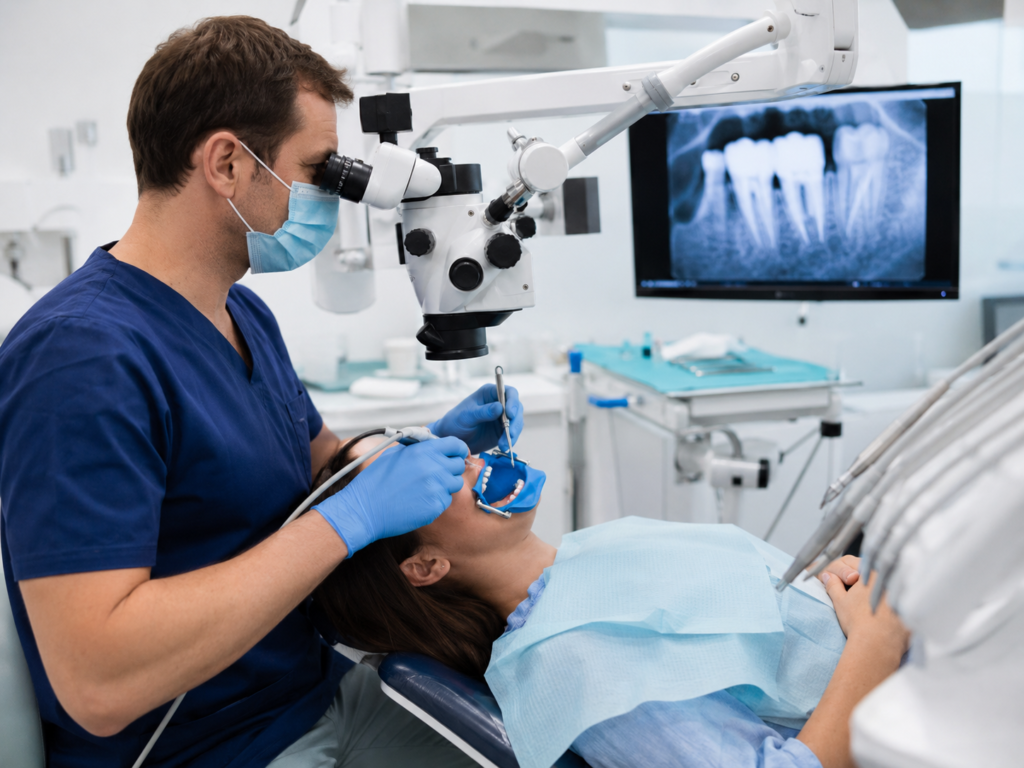
Root canal treatment can fail when the canals were not fully cleaned, when one canal was missed or when the tooth became infected again. Infection can develop slowly and without strong pain. This is why radiography is very important.
A failed root canal does not always mean tooth extraction. In many cases, endodontic retreatment can be done. This means the canals are opened again, cleaned better and sealed carefully.
Symptoms may include:
After correction, the tooth often needs a strong restoration. A crown may help protect the remaining structure. This is especially important for back teeth.
Dental crowns can fail for several reasons. They may not fit well at the gum margin. They may be too high in the bite or may not have the right aesthetic look.
A weak crown is not only a visual problem. It can allow bacteria to enter below it. Over time, decay, inflammation or unpleasant smell may appear.
A crown should be evaluated for:
If the crown cannot be corrected with small adjustments, it may need replacement. Failed dental treatment correction in this case requires analysis of the tooth, gums and bite. Only then is the new material selected.
Dental veneers require very careful planning. When shape, size or colour does not fit the face, the result can look artificial. The patient may feel that the teeth are too large, too white or too identical.
An aesthetic smile should not look copied. It should fit the lips, face, age and character of the patient. That is why veneer correction starts with aesthetic analysis.
The dentist looks at:
In some cases, veneers can be slightly reshaped. In other cases, new veneers are needed. The goal is an aesthetic result that does not loudly show it is dental work.
Dental implants need precise planning. Position, bone quality, gum condition and bite forces have a strong effect on success. When one of these elements is ignored, risk increases.
A problematic implant can show pain, movement, inflammation or bone loss. Sometimes the problem is not the implant itself, but the crown on top of it. An overloaded crown can create unnecessary stress.
Before correction, the dentist must evaluate:
In mild cases, professional cleaning and prosthetic correction may be enough. In more advanced cases, surgical treatment, bone regeneration or implant replacement may be needed. The decision is made only after examination.
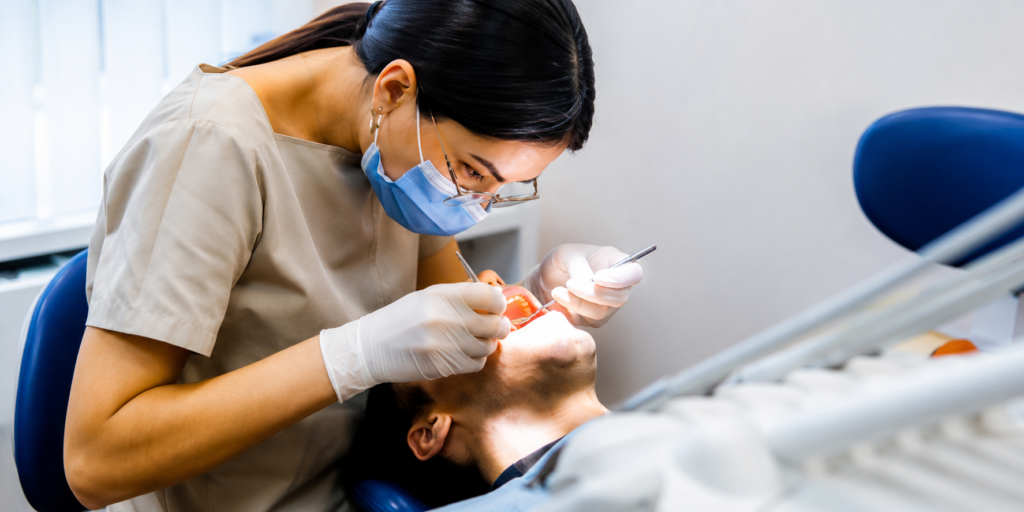
Orthodontic treatment can fail when teeth do not move according to the plan or when the result is not maintained after treatment. One common reason is not wearing the retainer. Another reason is insufficient bite planning.
Teeth should not only look straighter. They should function well during chewing. If this does not happen, the patient may have wear, pain or relapse.
Correction may include:
At City Dental Clinic, orthodontics is not seen as only an aesthetic treatment. It is connected with function, stability and long term dental health. This makes the plan more complete.
The gums are the foundation of every dental treatment. If there is inflammation, bleeding or bone loss, crowns, veneers and implants may not remain stable. Aesthetics cannot be stable on unstable tissues.
Many patients ask for failed dental treatment correction because old restorations look dark near the gums. In other cases, the gum moves away and exposes the edge of the restoration. These are signs that periodontal health must be checked.
The dentist checks:
Before replacing a restoration, the gums often need treatment first. This makes the result cleaner, healthier and more stable.
Technology does not replace clinical thinking, but it makes planning more precise. 3D scans, radiographs and photos help the dentist see more details. This is especially important when the patient already had previous treatments.
A corrective plan should be clear before the work starts. The patient should understand what will be removed, what will be saved and what will be rebuilt. This reduces the risk of surprises.
Technology helps with:
A well corrected treatment should not be fast at any cost. It should be well planned. This is why diagnosis is the most important step.
When a treatment has failed once, the cheapest solution can look tempting. But a weak correction can cost more later. The patient may lose time, money and a healthy dental structure.
Failed dental treatment correction requires more care than the first treatment. The dentist has to work on a situation that has already been changed. This makes planning even more important.
Before you decide, ask:
A clear answer shows seriousness. A very fast promise without complete analysis should be treated with caution.
A corrective plan does not start with the material. It does not start with the price either. It starts with the main question, why did the problem happen.
At City Dental Clinic, evaluation may include patient discussion, clinical examination, radiographs and interdisciplinary planning. In complex cases, specialists in implantology, oral surgery, orthodontics and dental aesthetics may be involved. This helps when the problem affects more than one area.
The plan may be divided into phases:
This working method makes treatment more organised. The patient knows what happens at each step. This creates more confidence and less stress.
A second opinion is useful when you have constant pain, when the restoration does not look good or when you do not understand the plan you were given. It is not a sign of distrust. It is a way to make a more informed decision.
You may ask for evaluation if:
The earlier you ask for a check-up, the more chances there may be to save teeth. Waiting can make treatment longer. This is why early signs should not be ignored.
The patient should clearly explain what bothers them. Pain, appearance, colour, shape and chewing sensation are all important. The dentist should listen to these details before proposing a solution.
Photos before treatment, old X-rays and information about previous treatments can help a lot. Even if you do not have all the documents, clinical evaluation can provide valuable information. The more is known, the more accurate the plan becomes.
Good communication helps with:
Failed dental treatment correction is not only a repair. It is a chance to build a smarter result than the first time.
If you had a dental treatment that did not give the right result, do not let the problem get worse. City Dental Clinic can help you with a complete evaluation and a clear correction plan. We focus on diagnosis, safety and a result that looks natural.
Contact us for:
Phone: +355 68 510 7070
Email: info@cdc.com.al
Address: Siri Kodra Street, Building No.13, Entrance No. 1, Tirana
Book your consultation and get a clear answer for your smile. The first treatment may have failed, but the second plan can be the one that changes everything.

