
Losing a tooth may affect your smile as well as your general health and well-being, making it a bad experience. With the help of dental implants, which are a common and efficient method of replacing lost teeth, you may live a more comfortable life free from the limitations associated with missing teeth.
Besides their many benefits, the decision to get dental implants should be made carefully as it will be an investment in both time and money. Additionally, it is important to understand that dental implants need careful maintenance and care to ensure that they last for a long time and remain healthy.
In this blog post, we will focus on the maintenance of dental implants, why is it important, proper cleaning techniques, and special tools that need to be used, while also discussing how will your lifestyle choices affect the health of your new teeth. Continue reading if you are interested in learning more about the maintenance of dental implants and how to make sure they last a lifetime.

If you have dental implants, it is important to take care of them just as you do with your natural teeth. Here’s why maintenance is essential:
Lower chance of infection: Bad oral hygiene might cause infection around the implant since your mouth is full of microorganisms. this condition is called Peri-implantitis and it may even lead to consequences such as bone loss.
Longer implant lifespan: An implant could last for several decades or even a lifetime. This reduces the need for regular replacement, ultimately saving you time and money.
Keep the surrounding teeth healthy: The remaining healthy teeth may be pressured by poorly managed dental implants. As a result, they may gradually move, loosen, or even shatter.
After the dental implant procedure, the patient will continue their life as normal. They will be able to eat, speak, and smile without worrying how their teeth look.
Dental implants consist of three parts, the metal post(implant), the abutment, and the crown. The implant will serve the role of the root, the crown will replace the missing tooth and the abutment will hold these two pieces together.
Dental implants offer great long-term benefits for oral health and here are some of them that you need to know:
One of the main benefits dental implants offer is their stability, which in some cases may be even greater than that of a natural tooth root. This stability is crucial for supporting the new crown and preventing jawbone deterioration.
Through the process of osseointegration, the bone will start to fuse around the metal post, holding the implant in place so it won’t move or fall. This way you will be sure that your new tooth won’t fall or move from its place, unlike with dentures.
One thing that you might not know is that dental implants will help keep the mouth environment bacteria-free. This is because they help prevent the teeth from decaying.
Implants assist in preventing gum disease and, in certain situations, reverse it because they shield your natural teeth from microorganisms that may penetrate the root. Because of this, your implant-supported teeth are more immune to infections and contribute to the overall health of your mouth.
Dental implants have been used for many years, and their success rate is very high. This procedure is proven to be the best for teeth restoration, surpassing both dentures and dental bridges.
After receiving dental implants, patients can eat, speak, and smile confidently without worrying about how their teeth look. Once you have your new teeth, you’ll understand why this is a wise investment of time and money.
Compared to other dental restoration methods, dental implants are the most comfortable choice. A dental implant’s customized fit is designed to resemble the sensation of real teeth. Additionally, dental implants help keep the jawbone healthy and strong. Once the patient becomes accustomed to the feel of dental implants in their mouth, they will feel no different from natural teeth.
Thanks to dental implants, your smile will look more perfect than ever providing the confidence that you have been missing. After the procedure, you will feel safe and comfortable, knowing that you will have your new teeth for a lifetime.

The crowns placed on top of dental implants will not be prone to cavities, unlike natural teeth. However, dentists still advise patients to practice good oral hygiene and take care of their new implants.
Here are some tips we recommend patients follow:
Despite their ability to withstand bacterial deterioration, metal crowns, and implants can cause gingivitis and periodontal disease if the gums around them are not regularly brushed and flossed. Furthermore, bacterial infections have the capacity to rapidly travel to the bone beneath the implant, causing it to deteriorate and impair the stability of the implant.
This being said, we advise our patients to brush and floss twice a day, after they wake up and before going to sleep. Additionally, you might even consider using a mouthwash that will help eliminate harmful bacteria.
After the procedure, it is a good idea to give the tissues the right time to heal before returning back to your oral hygiene routine as you may risk damaging the implant area.
Patients who have crowns and implants should use a toothbrush with soft bristles to prevent scratches that could open gaps for germs to gain access. Additionally, removing plaque that harbors germs and poses a risk to an implant is made easier by using adaptable instruments to reach hard-to-reach areas surrounding an implant.
Although you will be able to eat any type of food you like after the implant procedure, it is important to understand that certain foods can damage the implant’s structure. These include chewy, hard, and sticky foods that can put excessive pressure on the teeth.
We advise our patients to avoid foods like nuts, apples, popcorn, ice, and similar items if they want to keep their implants healthy, as these can apply excessive pressure to the area. Additionally, such foods can invite bacteria, so it’s best to avoid them.
Bruxism, also known as teeth grinding, is an oral condition involving involuntary pressure on the jaw. This can even occur during sleep, making it difficult to control.
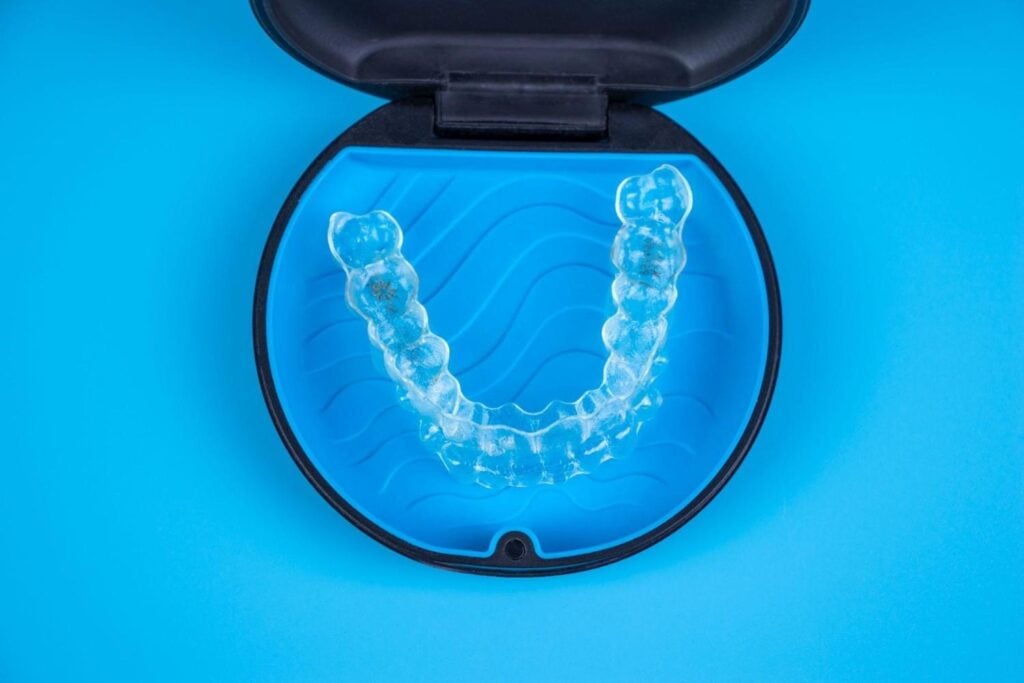
Since many people are unaware of this condition it will be difficult to control, making it a bigger risk for dental implants. In order to avoid the damage that teeth grinding might cause, dental professionals might recommend a night guard. This nightguard will protect the teeth from the pressure and will make sure the implants do not dislodge from the bone.
Besides brushing and flossing daily, another important factor that will help keep the implants healthy and last for a long time will be professional dental cleanings. During this procedure, the dentist will remove plaque and tartar accumulated around the implant and the nearby teeth while using specialized tools. This way you will void inflammation of the gums and reduce the likelihood of bone loss.
In order to reach the small areas around an implant that collect germs, dental hygienists might also suggest which brushes to use and other dental tools that will be helpful. During these consultations, your dentist may also keep an eye on the implants’ development, making sure everything has healed correctly and stayed in place.
Dental implant maintenance will not be a lot different from your regular hygiene routine. It is important to find the right toothbrush with soft bristles that will clean the teeth while also preventing gum irritation. Besides brushing and flossing, using a tongue scraper twice a day will also remove bacteria from your mouth and keep the mouth smelling fresh.
Interdental brushes are tiny brushes that resemble tiny pipe cleaners. The purpose of these brushes is to remove plaque from between teeth that your typical toothbrush would miss. In order to avoid damaging your gums or irritating your delicate teeth, if you have dental implants, the dentist suggests you use an interdental brush with extremely soft bristles.
An electric tool called a water flosser uses a stream of water to get rid of plaque in the spaces between your teeth. For those who have dental implants, water flossers are especially helpful since they massage the gums and assist in getting rid of any food particles or debris that could be stuck in difficult-to-reach areas.

