
E-Max vs. zirconia crowns is an important comparison when restoring damaged or discolored front teeth. E-Max generally offers enamel-like translucency, while zirconia provides greater strength and more control when masking a dark underlying structure.
Neither material is automatically better for every front tooth. Tooth color, bite forces, restoration type, available thickness, and laboratory design determine which option is more suitable.
E-Max is often selected for a single front crown when the underlying tooth has a favorable color and the main objective is to match natural enamel. Its optical properties allow light to enter and reflect through the restoration.
Zirconia may be more appropriate when the prepared tooth is severely discolored, contains a metal post, carries heavy bite forces, or forms part of a bridge. Modern multilayer and high-translucency zirconia can also provide natural-looking anterior results.
The best material is therefore the one that balances appearance, support, strength, and masking for the individual tooth.
E-Max crowns are made from lithium disilicate, a metal-free glass-ceramic. The material combines clinically useful strength with translucency, brightness, and optical depth.
Lithium disilicate is available in different translucency and opacity levels. This allows the dental technician to select a material according to the color of the prepared tooth and the required amount of masking.
A highly translucent option can integrate well over a favorable natural tooth. A more opaque version may be used when the underlying structure requires additional coverage.
Our complete guide to E-Max crowns explains the material’s composition and common clinical uses.
Zirconia crowns are produced from zirconium dioxide, a strong metal-free dental ceramic. Zirconia is used for single crowns, bridges, implant restorations, and areas exposed to substantial bite forces.
Not all dental zirconia has the same properties. Different formulations provide different balances of strength, opacity, and translucency.
Traditional high-strength zirconia is relatively opaque. Newer high-translucency and multilayer zirconia allows more light transmission and is designed for visible restorations.
Simply requesting “a zirconia crown” is therefore not specific enough. The dentist and technician must select the zirconia type, design, thickness, shade, and finishing method.
Factor | E-Max crown | Zirconia crown |
Material | Lithium-disilicate glass-ceramic | Zirconium-dioxide ceramic |
Translucency | Excellent | Depends on the zirconia formulation |
Front-tooth appearance | Highly enamel-like | Very good with modern aesthetic zirconia |
Strength | High for selected single crowns | Generally higher |
Masking a dark tooth | Depends on opacity selection | Often provides stronger masking |
Heavy grinding forces | Requires careful assessment | Frequently preferred |
Single anterior crown | Excellent indication | Suitable according to the case |
Anterior bridge | More limited indications | Usually more suitable |
Implant restoration | Used in selected designs | Widely used |
Bonding | Commonly adhesively bonded | Cemented or bonded according to the preparation |
E-Max often has an advantage when the main objective is reproducing natural enamel translucency. Its glass-ceramic structure allows light to pass into and reflect from the crown.
This becomes particularly important when replacing only one front tooth. The restoration must match the neighboring teeth in shade, value, texture, fluorescence, and light response.
Modern aesthetic zirconia should not automatically be considered opaque. Multilayer zirconia creates a gradual change in shade and translucency from the cervical area toward the incisal edge.
The technician’s work remains essential with either material. A poorly selected E-Max crown may look artificial, while carefully characterized zirconia can blend naturally with adjacent teeth.
A monolithic zirconia crown is milled mainly from one zirconia block. It has no extensive external porcelain layer, reducing the risk of that layer chipping away.
Layered zirconia uses a strong zirconia framework with aesthetic ceramic applied over selected areas. This technique can create greater optical depth and more detailed characterization.
The veneering ceramic is not as strong as the zirconia framework. Its thickness and position must therefore be planned according to the bite and available space.
Multilayer monolithic zirconia provides another option. Strength, shade, and translucency can change gradually within the same block, allowing the technician to create an anterior crown without relying on a thick external layer.
E-Max may be preferred when restoring a front tooth with a favorable underlying shade. It is especially valuable when the crown must match highly translucent neighboring teeth.
It may be suitable when:
E-Max can be produced as a full-contour crown, a cut-back restoration, or a layered crown. The design depends on the amount of space and the aesthetic detail required.
Zirconia may be preferred when strength and masking are the main clinical priorities. It is also useful when the crown belongs to a larger restorative structure.
It may be recommended when:
For a front tooth, the selected zirconia should have appropriate optical properties. Very opaque zirconia can look flat if it is used without sufficient characterization.
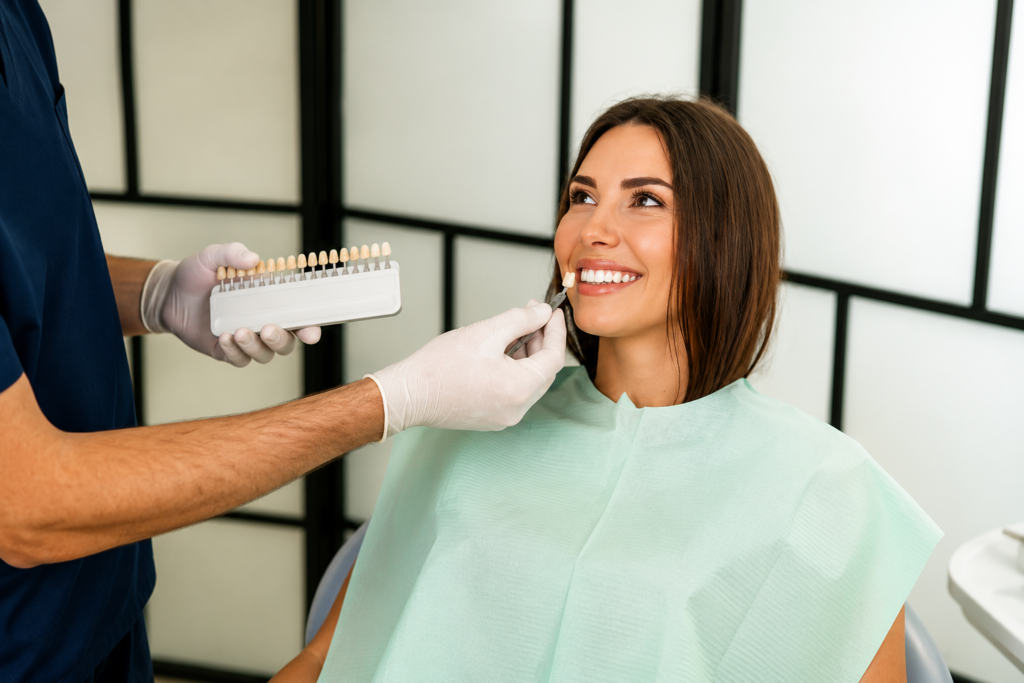
The color beneath the crown has a major influence on a translucent restoration. A healthy tooth with an even shade is easier to restore than a severely darkened one.
Root-canal-treated teeth can develop internal discoloration. Metal posts, old core materials, and some implant components may also create a dark background.
The selected crown must provide the right level of masking. Zirconia may offer more control over a dark foundation, although E-Max is also produced in several opacity levels.
A crown that is too translucent may appear gray over a dark tooth. A restoration that is too opaque may look noticeably different from the surrounding natural teeth.
Matching one central or lateral incisor is one of the most demanding restorative procedures. The new crown must resemble the corresponding tooth under natural and artificial light.
E-Max is often preferred when the prepared tooth has a suitable color and the bite is favorable. Its translucency and characterization options can help reproduce the neighboring tooth.
Aesthetic zirconia may be more appropriate when a dark foundation needs to be masked or the tooth requires additional strength. Photographs, shade mapping, and communication with the dental technician are essential in either case.
The shape of the restoration must also match the patient’s existing tooth proportions. Our guide to choosing the right tooth shape explains why size and contour should be planned individually.
A dental bridge requires sufficient material strength around its connectors. Zirconia generally has a wider range of bridge applications than lithium disilicate.
The zirconia formulation must reflect the length and location of the bridge. Highly translucent zirconia can have different mechanical properties from traditional high-strength zirconia.
As bridge length increases, structural demands become more important. The technician must then balance connector strength with the optical requirements of the visible area.
Grinding and clenching create forces that can damage crowns as well as natural teeth. Selecting the strongest material alone does not resolve the underlying functional problem.
Zirconia may be preferred because of its higher strength, but crown thickness and bite contacts must still be carefully designed. The surface should be correctly polished to reduce unnecessary wear on opposing teeth.
A protective night appliance may be recommended. Without managing the bite forces, complications can occur with any restorative material.
A crown covers the tooth circumferentially and requires more preparation than a veneer. It is generally used when the tooth has lost substantial structure, contains a large restoration, is weakened, or has received root canal treatment.
A veneer covers primarily the front surface and can preserve more natural structure. It may be appropriate when the concern is mainly aesthetic and the tooth remains strong.
A healthy tooth should not automatically receive a crown solely to change its color. Whitening, bonding, contouring, or veneers may provide a more conservative solution.
Our general dentistry and dental aesthetics page provides further information about crowns, veneers, whitening, and conservative restorations.
Planning begins with an examination of the tooth, surrounding gums, and bite. An X-ray may be needed to assess the root, previous root canal treatment, and supporting structures.
A personalized plan may include:
City Dental Clinic works with the Perfect Dent 4.0 laboratory, which uses CAD/CAM systems and works with lithium disilicate, zirconia, and other restorative materials.
Yes. The crown material, remaining tooth surface, and shape of the preparation determine the cementation protocol.
E-Max can be adhesively bonded to dental tissues. This creates a strong connection between the ceramic, bonding material, and prepared tooth.
The shade of the resin cement can influence the final appearance of a highly translucent crown. Cement selection must therefore be included in the aesthetic plan.
Zirconia requires a different surface-treatment protocol. Depending on the preparation and selected system, it may be conventionally cemented, self-adhesively cemented, or adhesively bonded.
Both materials can function for many years when the clinical indication, preparation, laboratory production, and maintenance are appropriate. Crown strength is only one part of longevity.
Decay at the crown margin, gum disease, grinding, poor fit, and bite changes can cause problems even when the ceramic remains intact. Regular examinations help identify these issues early.
Read our guide to how long dental crowns last for more information about replacement signs and preventive care.
E-Max and zirconia crowns should be cleaned like natural teeth. The area where the crown meets the gum requires particular attention.
For long-term maintenance:
A strong ceramic does not protect the underlying tooth from decay. Oral hygiene and a well-sealed crown margin remain essential.
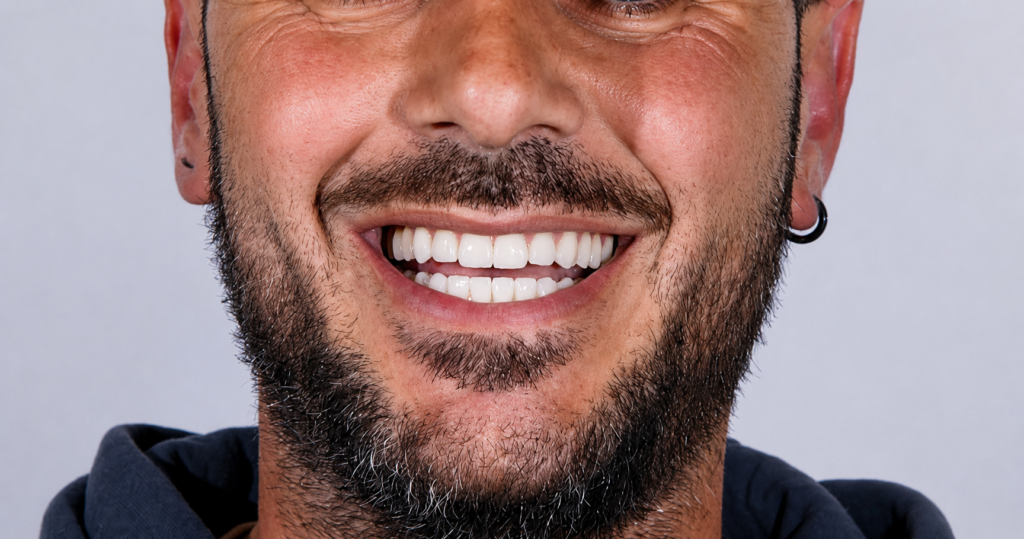
E-Max often provides highly natural translucency, especially for a single front tooth. Modern aesthetic zirconia can also produce excellent results when its formulation and characterization are selected correctly.
Not all zirconia is highly opaque. High-translucency and multilayer zirconia materials are specifically used for visible anterior restorations.
Zirconia generally provides higher strength. E-Max offers sufficient resistance for many single anterior crowns when the case is appropriately selected.
Zirconia often provides stronger masking. E-Max is also available in different opacity levels, so the final decision depends on the severity of the discoloration.
Yes, in selected cases. The dentist must assess the remaining tooth structure, internal discoloration, core material, and bite forces.
The ceramic itself has good color stability. Surface deposits, gum changes, or color changes in the surrounding natural teeth can still alter the overall appearance.
No. Whitening agents affect natural teeth and do not change the shade of E-Max or zirconia crowns.
Zirconia is frequently used because of its strength and masking ability. The final result also depends on the implant abutment, gum level, tissue thickness, and crown design.
Minor surface damage may sometimes be repaired with composite material. Larger fractures generally require laboratory assessment or replacement of the crown.
E-Max may be more suitable when the priority is natural translucency in a single crown and the underlying tooth has a favorable shade. Zirconia may be the better choice when greater strength, masking, a bridge, or an implant restoration is required.
The material name alone cannot guarantee a natural or durable result. Tooth preparation, material subtype, laboratory technique, cementation, and bite design are equally important.
At City Dental Clinic, the choice between E-Max and zirconia begins with an assessment of the tooth, underlying shade, gums, and bite. The objective is to create a crown that protects the tooth and integrates naturally with the visible smile area.
Your consultation may include:
Contact City Dental Clinic at +355 68 510 7070, email info@cdc.com.al, or visit us at Rruga “Siri Kodra,” Building No. 13, Entrance No. 1, Tirana, Albania.

