
A dental implant procedure is the best way of replacing missing teeth. They are composed of three main parts; the screwlike post, the abutment and the prosthesis. After the procedure, they will look the same as your natural teeth.
However, many people wonder about the surgical process, whether it will be painful, and what to expect. In this blog post, we will explain the procedure in detail to help you make an informed decision about the best treatment for you.
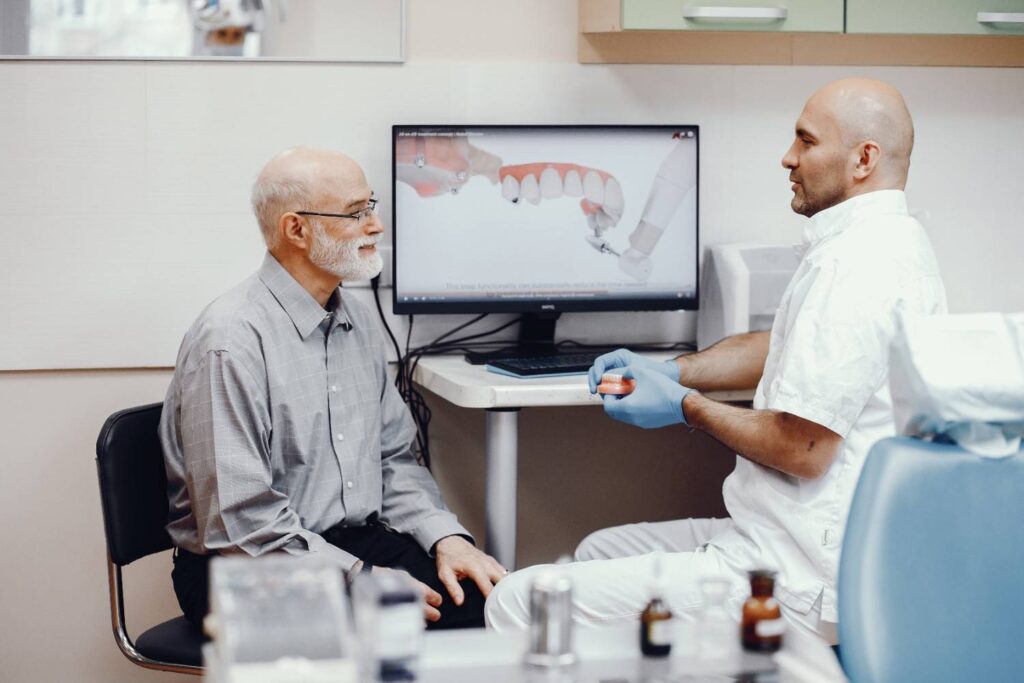
Dental implants are a widely used technique to replace missing teeth. They are composed of a screw-like post that will be surgically inserted into the jawbone. This post will serve as the root that will carry the prosthesis which can either be a crown or a dental bridge.
The crown, denture, or prosthetic teeth are connected directly to the stud. In the meanwhile, the post itself is what gives your artificial teeth their natural appearance and functionality. In contrast to poorly fitting bridgework or dentures that are prone to falling off, because they aren’t permanently attached to your gums and mouth anyhow, this will be the best treatment for missing teeth.
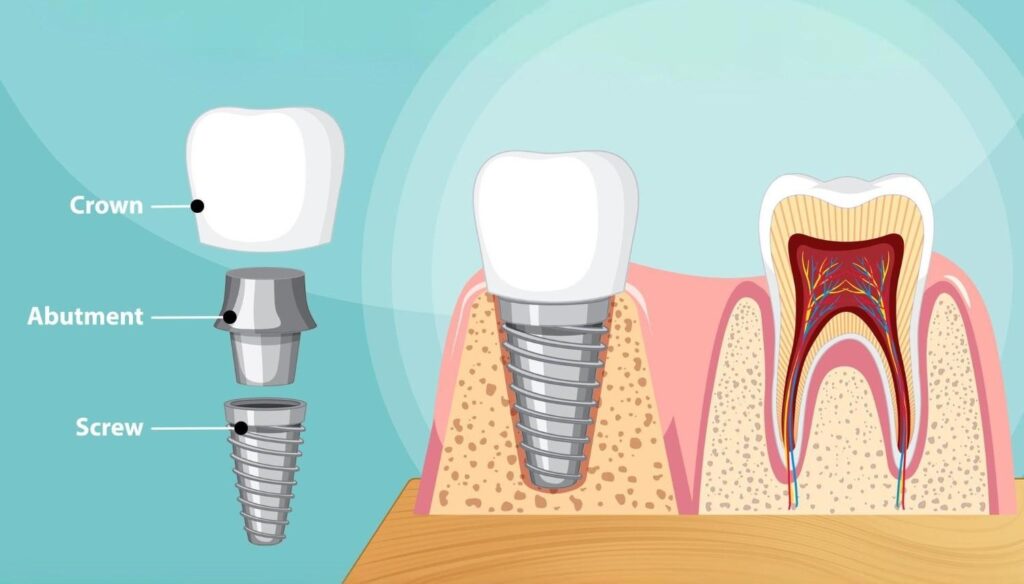
Dental implants are composed of three main parts which are:
The dental implant refers to a metal screw-like post that will be inserted into the jawbone surgically. It will either be placed in the lower or upper jawbone depending on the location of the missing tooth.
This metal post usually composed of titanium will serve the purpose of the root. Due to this they will feel and look the same as natural teeth. Different from bridges that require altering the shape of the teeth located nearby, dental implants will only be supported by the jawbone once they are properly integrated.
The abutment is another part of the implant that will be placed on top of the screw-like post. This serves as the connector of the post and the prosthetic tooth.
Abutment can either be composed of porcelain, zirconia, gold, titanium or stainless steel. All these materials are strong and durable and add extra support to the crown, handling the pressure of biting and chewing.
Last but not least we have dental crowns. Crowns will be placed on top of the abutment to serve the same as your natural tooth.
Our dentist here at City Dental Clinic in Albania will design the crowns based on the patient’s other teeth, taking into account their shape, size and colour. This is important since you don’t want them to make a huge difference.
Different from the abutment and the implant post, the crown is not as durable and replacing it may be necessary. Their normal lifespan will be about 10-15 years depending on the material used and how you take care of it.
Usually, porcelain is fused with PFM, a metal alloy, to create the crown, giving you a prosthesis that is maybe more durable than your normal tooth. This crown is attached to the abutment using screws or cement. Composite, a restorative substance used to fill spaces within the teeth, covers the screw hole if it is screwed.

The main function of dental implants is to replace one or several missing teeth. As we mentioned, the results of this procedure are permanent and they replace every part of the tooth including the root. This is not achievable by any other technique.
Here is how the implant process goes:
The first step of dental implant procedure is the initial consultation. During this consultation the dentist will take a look at your teeth and soft tissues that surround it.
If the tooth is severely damaged, there will be a need for extraction, but if the tooth is missing the dentist will need to examine the condition of the jawbone. If it is needed bone grafting or sinus lift will be recommended before placing the implants.
Bone grafting procedure can be time consuming but it will be necessary. In some cases of jawbone loss the dentist may also recommend all-on-4, all-on-6 or all-on-8 which are only used in cases where the whole set of teeth is missing.
Choosing the right technique is very important as it will determine whether the procedure is successful or not.
Another important factor the dental surgeon must consider before placing dental implants is the condition of the soft tissues. If the patient has gingivitis or periodontitis, the appropriate measures must be taken to treat it. Neglecting this can lead to implant failure.
After deciding on the right implant technique you will need to prepare for the procedure. If you have bone loss you will firstly need to prepare for the bone augmentation before getting ready for the implants.
You don’t need much preparation besides this. For further advice regarding this step, we recommend you contact City Dental Clinic in Albania.
Once you are completely ready and the bone has healed, the dentist will surgically insert the dental implant into the jawbone. They will cut a small space in the gums and then drill into the jawbone. This will create the necessary space for the implant post so that the bone will be properly screwed.
After the new implant is placed it will take some time for it to be fully integrated. This is called the osseointegration process and it takes about 3 to 6 months. After this period is over the dentist will place the crown on top. The abutment will serve as a connector between these two parts and hold them closely together.
Choosing the right prosthesis for replacing missing teeth is also important. The crown is one of the most used designs and it is much more preferred due to its many benefits.
They come in different compositions including: porcelain-fused-to-metals, zirconia, all-porcelain or all-ceramic, and composite resin. Each of these materials differs in terms of durability and look. In order to make the best choice your dentist will take every factor into consideration.
When compared to dentures and dental bridges, dental implants are much better. They won’t slip and the dental surgeon won’t need to alter the nearby teeth as they will solely rely on the jawbone.

Fills in Gaps and Restores Your Bite
When we miss a tooth and don’t replace it, our teeth will tend to move closer together in order to close the gap. This movement will cause changes in the whole mouth and cause misalignment.
Since dental implants close the space the teeth will stay in their place and avoid any unnecessary shifting. This means the jaw shape will remain intact and the teeth won’t change their position.
Stops Facial Structure Degradation
Another important benefit of dental implants is that it will prevent facial structure degradation. Our jaw is a very important part of the face and if missing teeth are not replaced it will make it lose its integrity. This will make you look older and create an imbalance in the face.

