
Dental implants in Albania for Italian patients over 60 can restore chewing function, stability, and everyday comfort. Age alone does not determine whether implant treatment is possible. The decision depends on general health, bone condition, gum health, and the patient’s ability to maintain the result.
Being over 60 does not mean that a patient is too old for implants. According to an International Team for Implantology consensus statement, the advanced age of 75 or older is not, by itself, a contraindication to implant therapy.
The assessment should focus on the person rather than the birth date. A 68-year-old with controlled diabetes, good oral hygiene, and suitable bone may have more favorable conditions than a younger patient with active infection, heavy smoking, or poor maintenance.
For Italian patients over 60, the plan must connect two priorities. The first is medical safety, while the second is a realistic treatment schedule that can be completed and maintained after returning to Italy.
Missing teeth affect more than appearance. They may make chewing difficult, alter the bite, and place additional pressure on the teeth that remain.
A removable denture works for some patients, but it does not always remain stable. If it moves during eating or speaking, the patient may avoid certain foods and feel less secure during normal daily activities.
Dental implants create stable support points inside the jaw. Depending on the number of missing teeth, they can support one crown, an implant bridge, a stabilized removable denture, or a complete fixed restoration.
Suitability cannot be decided from an X-ray alone. The dental team must understand the patient’s oral condition, medical history, medications, and ability to care for the implant restoration over time.
The main factors usually include:
Some patients need treatment for periodontal disease, decay, or infection around existing roots before implant surgery. This does not necessarily exclude implants, but it means that the mouth must first be prepared for a stable result.
A panoramic dental X-ray can be used for the first remote assessment. It helps the clinic identify missing teeth, teeth that may be preserved, and visible areas of bone loss or infection.
The definitive plan usually requires a clinical examination and a 3D CBCT scan. This scan shows bone height and thickness, nerve position, sinus anatomy, and the space available for implant placement.
The assessment must also include gum health, the bite, the space required for the new teeth, and the condition of any old denture. Implants should not be planned as isolated screws; they must be positioned according to the final teeth they will support.
Not every Italian patient over 60 needs a full-mouth restoration. The aim is to select the treatment that addresses the real problem without removing teeth that can be maintained or adding procedures that do not provide a clear benefit.
When one tooth is missing, a single implant can support an individual crown. If the neighboring teeth are healthy, this can avoid preparing them to support a conventional bridge.
When several adjacent teeth are missing, one implant is not always needed for every tooth. A carefully selected number of implants can support a fixed bridge and distribute chewing forces across the restoration.
Patients who have lost most of their teeth, or whose remaining teeth have a very poor prognosis, may be evaluated for a fixed full-arch restoration. The number of implants is selected according to anatomy, available bone, bite forces, and prosthetic design, not simply according to the name of a package.
A removable denture retained by implants may be considered when the patient needs more stability than a traditional denture but still wants to remove the prosthesis for cleaning. It can also be useful when anatomy, maintenance ability, or other factors make a removable design more appropriate.
Bone loss is common when teeth have been missing for years or a removable denture has been worn for a long time. However, a panoramic X-ray is not enough to conclude that implants are impossible.
Some patients may be candidates for bone regeneration procedures or a sinus lift. These treatments can prepare the area for conventional implants, but they may extend the timeline and should be recommended only when they provide a clear clinical benefit.
For severe bone loss in the upper jaw, pterygoid or zygomatic implants may be evaluated. City Dental Clinic manages these cases through advanced maxillofacial surgery after 3D analysis and a complete medical assessment.

Immediate loading allows a temporary fixed tooth or bridge to be connected soon after surgery. The phrase “teeth in 24 hours” does not mean that every patient immediately receives the final restoration.
The surgeon must achieve adequate implant stability, and the bite must be carefully controlled. Bone quality, implant number, infection, bruxism, and general health all influence whether immediate loading is appropriate.
The temporary restoration provides appearance and function during integration. Once the implants and surrounding tissues are stable, the dental laboratory prepares the final restoration using the material selected in the prosthetic plan.
Most implant procedures are completed with local anesthesia. Intravenous conscious sedation may be evaluated for patients with significant anxiety, longer procedures, or more complex surgery.
Sedation is not selected only because a patient requests it. The anesthesiologist reviews medical history, medication, allergies, blood pressure, breathing, and any tests required for safe care.
Vital signs are monitored throughout the procedure. City Dental Clinic includes this medical supervision when a patient needs an additional level of relaxation and clinical control.
The first step can be completed before booking a flight. The patient sends a panoramic X-ray, clear oral photographs, a description of the problem, and a complete medication list.
This information supports an initial assessment and preliminary plan. The final diagnosis, number of implants, and need for additional procedures are confirmed only after the clinical examination and 3D scan in Tirana.
Before traveling, the patient should receive clear information about:
A single implant and a complete full-arch restoration do not follow the same timeline. In a two-stage treatment, the first trip may include preparation of the mouth, implant surgery, and placement of temporary teeth.
Osseointegration then takes place during the following months as the implants become stable within the bone. A later trip is used to check stability, take definitive records, and fit the final crowns or bridges.
Cases involving bone regeneration, infection, or extended healing may require an additional stage. The schedule must follow the biology of healing rather than being shortened to match a return ticket.
The patient should not leave immediately after the surgical appointment. The team needs time to check the treated area, the bite of the temporary restoration, and the early stage of recovery.
After intravenous sedation, an accompanying adult is required and the patient must not drive. The appropriate time to return to Italy depends on the procedure, the patient’s condition, and the findings at the postoperative check.
Before departure, the patient should have written instructions, a clear medication schedule, the clinic’s contact number, and the date of the next review. This supports continuity of care after leaving Tirana.
Implants cannot develop tooth decay, but the tissues around them can become inflamed. Daily cleaning must reach under implant bridges, around attachments, and inside any area where plaque can collect.
Cleaning tools should match the prosthesis and the patient’s manual ability. A person with arthritis or reduced hand movement may need an electric toothbrush, correctly sized interdental brushes, or help from a family member.
Regular reviews can be coordinated between the clinic in Albania and the patient’s dentist in Italy. Implant records, X-rays, and component information should be kept so that any professional involved understands exactly which system was used.
A warranty does not replace maintenance. Coverage is normally connected to following instructions, maintaining oral hygiene, attending professional checks, and wearing a night guard when bruxism is present.
City Dental Clinic’s payment and warranty conditions explain the difference between coverage for implants, prosthetic components, and the final restoration. Italian patients should request the written document and understand what is covered, for how long, and which follow-up records must be provided.
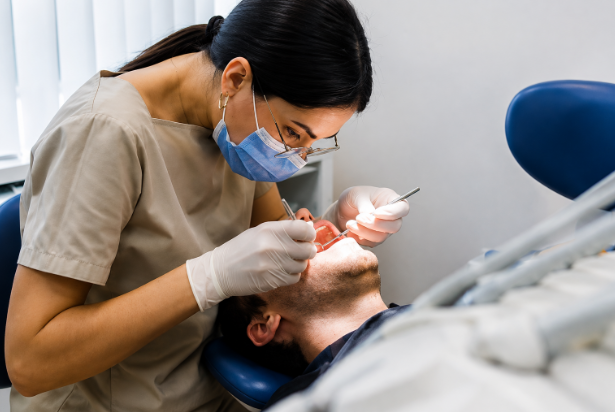
Treating a patient over 60 requires more than the technical placement of an implant. It may involve an oral and maxillofacial surgeon, a restorative dentist, an anesthesiologist, radiology staff, and a dental laboratory.
City Dental Clinic provides conventional and advanced implantology, including All-on-4, All-on-6, pterygoid implants, and zygomatic implants. The team uses 3D imaging, digital planning, and vital-sign monitoring for cases that need additional medical attention.
Italian-language communication helps patients understand the diagnosis, alternatives, and treatment stages. The clinic can also assist with transport, accommodation, and support during the stay, according to the selected dental tourism plan.
Prosthetic work is completed in collaboration with the Perfect Dent 4.0 digital laboratory. This connects the surgical plan with the design of both temporary and final teeth instead of treating each stage as a separate service.
A serious treatment plan should be understandable to the patient and the patient’s family. Before choosing the clinic or travel date, ask for specific answers.
The answers should reflect the scan, medical history, and functional objectives. A standard plan used for every patient is not appropriate for implant treatment after the age of 60.
Not because of age alone. General health, medications, bone, gum condition, and the ability to maintain the restoration are more important than the number of years.
It may be possible when diabetes is well controlled and treatment is approved after medical assessment. Recent tests and communication with the treating doctor may be required.
Not on your own. The surgeon and the relevant doctor decide whether medication continues, needs adjustment, or requires additional safety measures.
Not automatically. The type of osteoporosis, medication, dosage, treatment duration, and jawbone condition all need to be evaluated.
There may be several options, including bone regeneration, sinus elevation, or advanced implants for the upper jaw. The appropriate solution can only be selected after 3D imaging.
They are usually fixed temporary teeth used during healing. The final restoration is fitted after the implants and surrounding tissues have become stable.
The answer depends on the number of implants, type of surgery, sedation, and required postoperative checks. The clinic should define the stay after assessment rather than apply one schedule to every patient.
If you are over 60 and considering traveling from Italy for dental implants, begin with a documented assessment. A panoramic X-ray, medication list, and short description of the problem give the clinical team the information needed for the first step.
City Dental Clinic can help you with:
Phone/WhatsApp: +355 68 510 7070
Email: info@cdc.com.al
Address: Rruga “Siri Kodra”, Building No. 13, Entrance No. 1, Tirana, Albania

