
How long does professional teeth whitening last depends on the original tooth color, type of staining, and habits followed after treatment. For many patients, the visible effect lasts approximately 1–3 years, but whitening is not permanent.
Coffee, tea, strongly pigmented drinks, tobacco, and oral hygiene can all influence how quickly the result begins to fade.
Professional teeth whitening commonly remains noticeable for around one to two years. With consistent oral hygiene, regular dental care, and limited exposure to staining substances, some patients can maintain the result for up to three years.
Patients who frequently consume strongly colored drinks may notice new staining earlier. This does not mean the teeth immediately return to their original shade.
Fading normally occurs gradually. New pigments accumulate over time and slowly reduce the contrast created by treatment.
Our guide to professional teeth whitening and expected results explains how the procedure works and what patients can expect after treatment.
Situation after treatment | Possible duration |
Excellent oral hygiene and limited exposure to pigments | Around 2–3 years |
Moderate coffee or tea consumption | Around 1–2 years |
Frequent intake of staining foods and drinks | Several months to 1 year |
Plaque accumulation and missed professional cleanings | The result may fade earlier |
Dentist-supervised maintenance | May extend the interval between full treatments |
Natural tooth structure and biological differences also matter. Two patients following similar routines may not retain exactly the same shade for the same length of time.
Professional whitening acts on pigmented molecules within the tooth structure. The whitening agent breaks down these molecules so that the tooth appears lighter.
The treatment does not apply permanent white material over the teeth. Afterward, the teeth remain exposed to food, beverages, plaque, and natural color changes associated with time.
New pigments can gradually enter or attach to the tooth surface. Maintenance focuses on reducing this accumulation rather than making an unrealistic promise that the shade will never change.
Immediately after whitening, the teeth can appear particularly bright because of temporary dehydration. As moisture returns, the color may settle into a slightly more natural shade.
This small change does not indicate that the treatment has failed. The stable result should be assessed after the teeth have had time to rehydrate.
If bonding, veneers, or crowns are planned, their final shade should not be selected immediately after whitening. The dentist will recommend an appropriate waiting period before matching restorative materials.
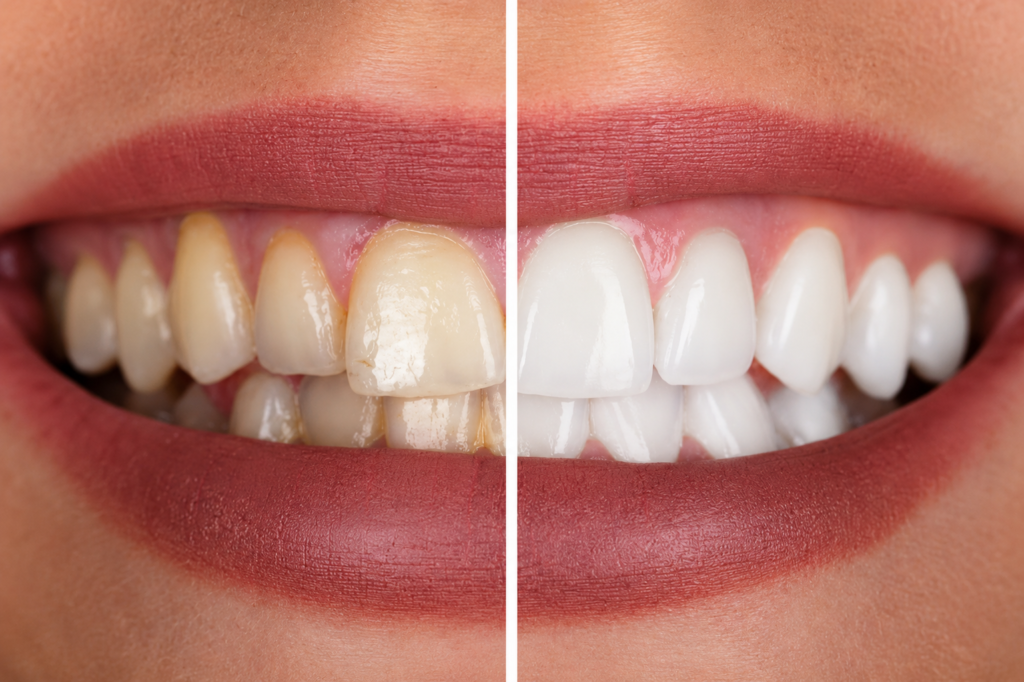
External stains develop on or near the tooth surface. They are commonly associated with pigmented food, drinks, plaque, and tobacco products.
Internal discoloration develops within the tooth and may be related to tooth formation, certain medications, trauma, or changes in the dental pulp. These cases can respond differently and may require another type of treatment.
Naturally yellow-toned teeth may respond differently from gray-toned teeth or teeth with severe internal discoloration. The maximum achievable change is therefore not identical for every patient.
The objective is to lighten the patient’s natural tooth color safely. Professional treatment cannot guarantee the same shade for every enamel and dentin structure.
In-office whitening uses professional products under dental supervision. Another option is a custom tray used at home with a product prescribed by the dentist.
Some treatment plans combine both methods. The selected approach affects how the result is achieved and how future maintenance is organized.
Coffee, black tea, colored soft drinks, dark sauces, and certain fruits can contribute to surface staining. Frequent exposure throughout the day can have a greater effect than occasional consumption.
Patients do not need to remove every colored food from their diet permanently. Rinsing with water and maintaining effective oral hygiene can reduce prolonged pigment contact.
Tobacco products can produce persistent surface stains and cause the whitening result to fade earlier. Avoiding them supports both tooth color and general oral health.
Plaque and tartar can make teeth look darker even when their internal color has not significantly changed. Daily brushing and interdental cleaning help maintain a clean surface.
The color seen when a person smiles results from the interaction between enamel and the underlying dentin. Enamel thickness, translucency, age-related changes, and previous wear can affect both the initial response and long-term appearance.
Whitening should therefore be tailored to the condition of the teeth. Increasing the concentration or repeating treatment does not always produce a better result.
The first hours are important because the teeth may be more sensitive and their color is still stabilizing. Patients should follow the specific instructions provided by their dentist.
During this period, they may be advised to:
A highly restrictive diet is not necessary for an extended period. The aim is to temporarily reduce exposure to strong pigments and irritants.
Maintenance does not depend on one special product. It requires a consistent routine that controls plaque, surface stains, and gum health.
To help the result last:
Highly abrasive products can roughen or wear the tooth surface. A rough surface may collect new stains more easily and can increase sensitivity.
Whitening toothpastes may remove some external stains through polishing ingredients. They do not reproduce the chemical process or degree of change provided by professional whitening.
Some formulas are more abrasive than standard toothpaste. Patients with worn enamel, exposed roots, gum recession, or sensitivity should ask their dentist which product is suitable.
Toothpaste should primarily protect against decay and support the patient’s oral needs. Color maintenance should not come at the expense of enamel health.
There is no universal schedule for repeating treatment. Some patients may need a limited refresh after one or two years, while others can maintain the result for longer.
The dentist should examine the current color, enamel, gums, sensitivity, and existing restorations before recommending another procedure. Repeating whitening too frequently without supervision may increase irritation and sensitivity.
Maintenance may involve a limited in-office session or a controlled home protocol. The concentration, product, and treatment period should be selected by the dentist.
Temporary sensitivity to cold is a common effect after whitening. It normally decreases once treatment has ended and the teeth have stabilized.
A dentist may recommend toothpaste for sensitive teeth or professional remineralizing products. Strong, persistent, or worsening sensitivity should be examined.
Pain isolated to one tooth may indicate decay, a crack, or another condition unrelated to routine whitening sensitivity. This is one reason a dental examination is required before treatment.
Whitening agents act on natural tooth structure but do not change the color of fillings, crowns, or veneers. This can create a shade difference between newly whitened teeth and existing restorations.
When a visible restoration is present, the treatment plan should determine whether it can remain or may need replacement after the new color stabilizes. This decision should consider tooth health as well as color matching.
Professional cleaning removes plaque, tartar, and some external staining. Teeth can appear cleaner and brighter afterward, but their internal natural shade has not been chemically lightened.
Whitening changes the appearance of pigments within the tooth structure. A patient may need cleaning before whitening so the dentist can evaluate the true starting shade and apply the product evenly.
Both treatments support appearance in different ways. Neither should replace routine prevention and examination.
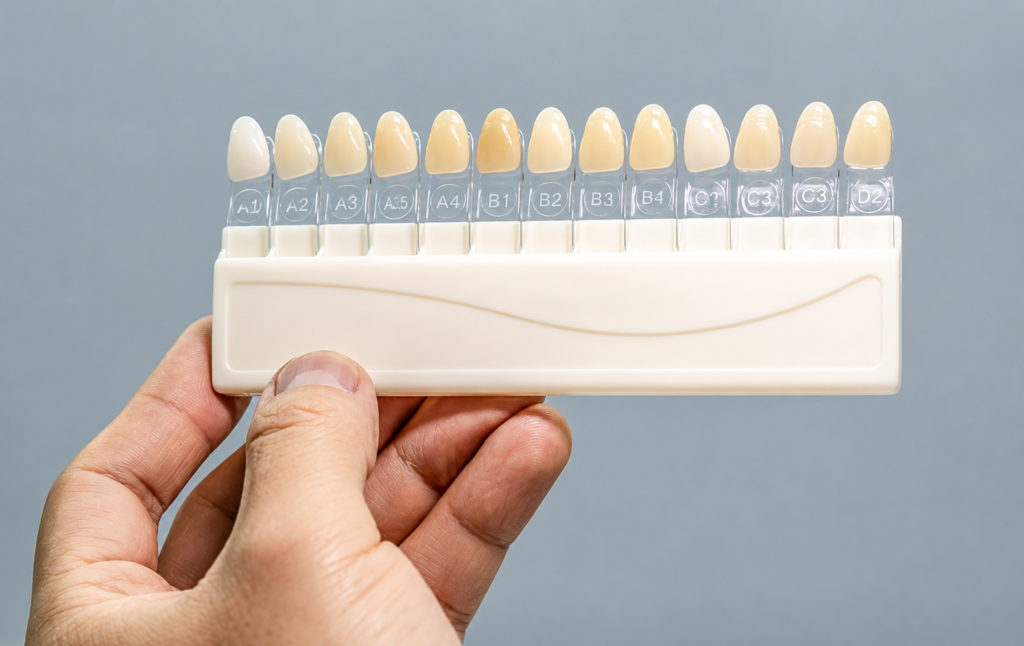
Deep internal stains, a root-canal-treated tooth, fluorosis, and some developmental changes may not respond like ordinary surface discoloration. Repeated whitening is not always the correct solution.
Depending on the diagnosis, alternatives may include controlled whitening of an individual tooth, cosmetic bonding, veneers, or crowns. The most conservative suitable option should be considered first.
If a tooth does not change after a properly supervised treatment, the case should be reassessed. Uncontrolled repetition can increase sensitivity without improving the color.
No. The result normally fades gradually as new pigments accumulate and the teeth undergo natural changes.
Coffee should be limited during the initial period according to the dentist’s instructions. Later, moderate consumption can be combined with rinsing the mouth with water afterward.
Cleaning removes plaque, tartar, and external stains. It supports maintenance but does not change the internal shade like whitening treatment.
Yes, but maintenance products and schedules should be provided or approved by a dentist. Unsupervised products may irritate the gums or increase sensitivity.
Yes. Rehydration can make the final color look slightly more natural than it appeared immediately after treatment.
There is no single number for every patient. The decision depends on enamel health, gum condition, sensitivity, existing results, and previous treatments.
Yes, but the cause of its discoloration must be diagnosed first. A traumatized or root-canal-treated tooth may require a specific technique.
No. External and yellow-toned discoloration often responds better, while deep internal staining may require a restorative alternative.
A professionally selected and supervised protocol is designed to protect dental tissues. Problems are more likely when unsuitable products, excessive concentrations, or repeated unsupervised treatments are used.
Before whitening, City Dental Clinic examines the teeth, gums, existing restorations, and type of discoloration. This allows the dentist to select an appropriate method and prepare a realistic maintenance plan.
Your consultation may include:
Contact City Dental Clinic at +355 68 510 7070, email info@cdc.com.al, or visit us at Rruga “Siri Kodra,” Building No. 13, Entrance No. 1, Tirana, Albania.

