
When a patient hears the sentence “you don’t have enough bone”, the first thought is often that dental implants are no longer possible. But this is not always true. At City Dental Clinic, bone loss is evaluated with 3D scanning and advanced treatment planning, to understand whether bone regeneration, sinus lift, pterygoid implants or zygomatic implants may be the right solution.
A dental implant needs strong support. It is placed inside the jawbone and needs to integrate with that bone over time. When the bone is not enough, the implant surgeon must find the safest way to create stability.
Bone is not just a space where an implant goes. It is the foundation that supports chewing pressure, distributes force and helps keep fixed teeth in place. Without this foundation, the final result may be weaker.
This is why CDC City Dental Clinic treats bone loss with careful planning. Before choosing any treatment, the patient needs to understand what happened to the bone and what solutions are available.
This sentence does not always mean that implants are impossible. It usually means that the current bone may not support a standard implant in a standard position. At this point, a deeper analysis is needed.
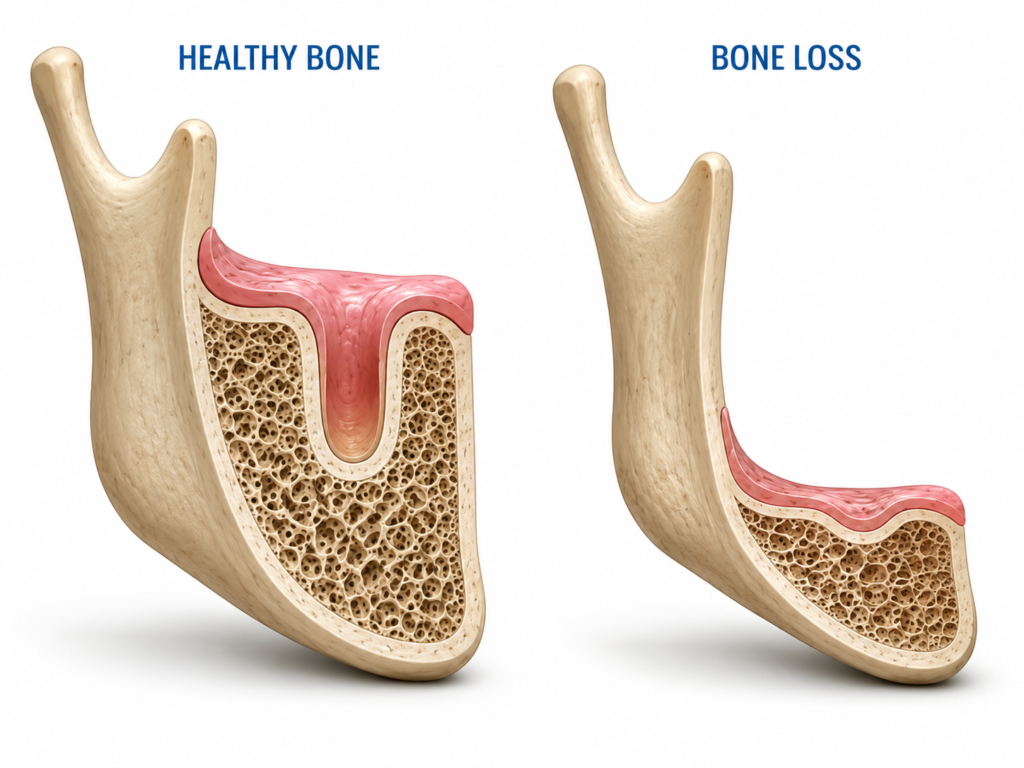
When a tooth is lost, the bone that used to hold it no longer receives the same chewing stimulation. Over time, that bone can begin to shrink. The process is slow, but it can become very visible after several years.
Bone loss can happen faster when there is infection, periodontal disease or trauma. It can also happen when removable dentures have been used for many years. The pressure from dentures can change the shape of the gums and bone.
Some patients come for a consultation after 5, 10 or 20 years of missing teeth. In these cases, the question is not only “can I get implants”. The better question is “which plan is safest for my bone”.
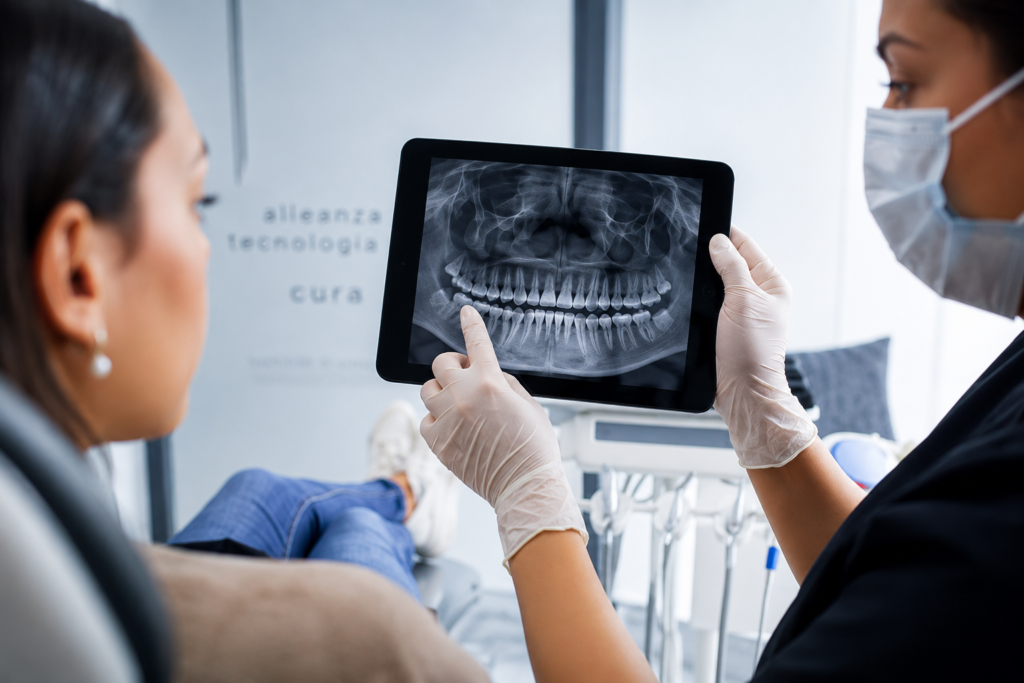
A simple panoramic X-ray can show many things. However, for bone loss, 3D CBCT is much more valuable. It helps the dentist see the height, width and shape of the jawbone in detail.
3D CBCT helps evaluate:
Without this evaluation, the patient may receive a general answer. With a 3D scan, the plan becomes more specific. This is especially important for patients who were refused by another clinic.
Not every clinic offers the same treatments. Some clinics work mostly with standard implants. When the bone is not suitable for that method, the patient may be told that there is no solution.
Modern implantology offers several other pathways. Depending on the case, treatment may include bone grafting, sinus lift, angled implants, pterygoid implants or zygomatic implants. The choice depends on anatomy and surgical experience.
This makes the choice of clinic very important. The patient does not only need an implant. The patient needs a team that can treat cases where the bone is not ideal.
Bone grafting for dental implants is a procedure that aims to rebuild or improve the bone foundation where an implant will be placed. It may be used when the bone is too thin, too low or damaged. The goal is to create better conditions for implant placement.
In some cases, grafting is done before implant placement. In other cases, it can be done during the same stage as the implant. The decision is made after clinical and radiological evaluation.
This procedure is not the same for every patient. The area, the amount of bone loss and gum health all matter. That is why the treatment plan must be individual.
Bone grafting for dental implants may be recommended when standard implants do not have enough support. It can be part of a larger plan for smile restoration. It is often used for patients who want fixed teeth, not removable dentures.
It may be needed in these cases:
In the upper jaw, a very common problem is the position of the sinus. When the back teeth have been missing for a long time, the bone can become lower. The sinus can occupy more space in the area where the implant would normally go.
In these cases, the dentist may recommend a sinus lift. This procedure helps create more support for the implant. It is used when implants in the back of the upper jaw need more bone.
Not every patient needs a sinus lift. Some patients may be treated with angled implants or other advanced techniques. This is why a 3D scan is so important.
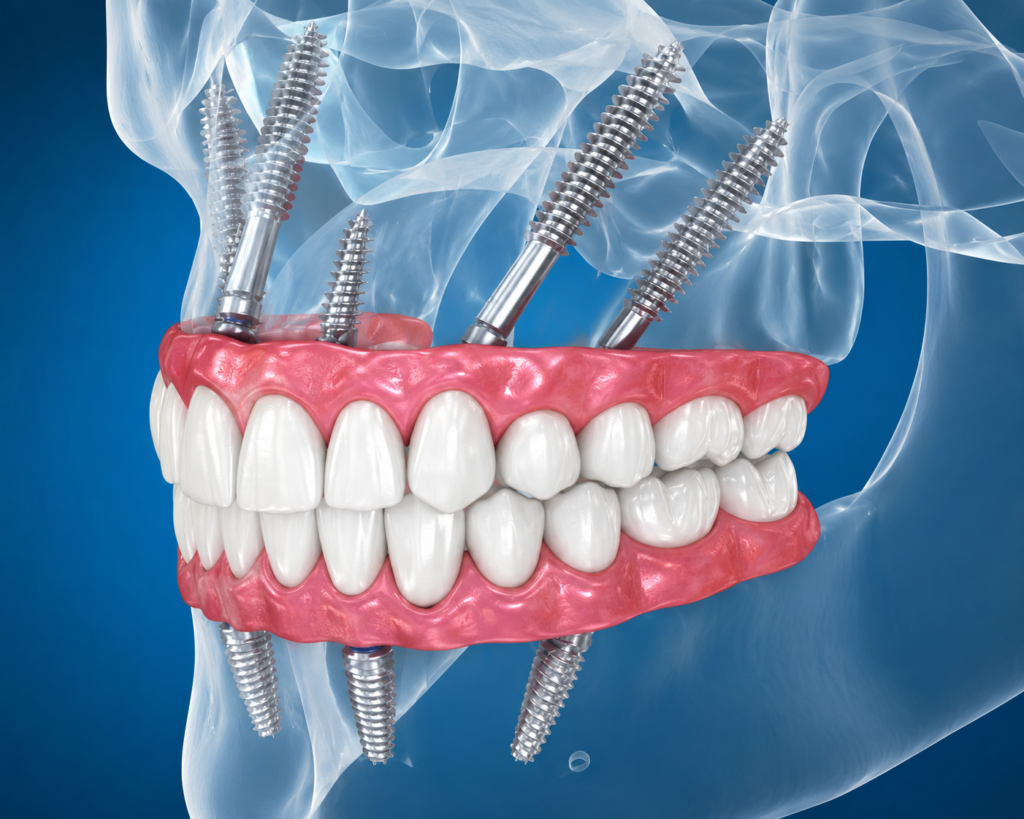
Pterygoid implants are an advanced option for cases with limited bone in the back of the upper jaw. They use deeper anatomical areas for support. This requires surgical experience and precise planning.
For some patients, this can be an alternative to a long grafting process. It may help when the patient wants fixed teeth and a more efficient solution. However, candidacy can only be decided after examination.
At CDC City Dental Clinic, advanced implant cases are evaluated with care. The goal is not to choose the most impressive procedure. The goal is to choose the right procedure for the patient.
When the upper jawbone is extremely limited, zygomatic implants may be an option. They do not rely on the standard jawbone in the same way as regular implants. They are anchored in the zygomatic bone, which offers strong support.
This technique is for advanced cases. It is not the first choice for every patient. It is used when conventional methods do not provide the needed foundation.
For patients who have been told many times that they have “no bone”, this can change the conversation. Instead of thinking only about removable dentures, they may discuss the possibility of fixed teeth. A clinical evaluation remains the key step.
After the 3D scan and consultation, the dentist should not give the patient only a short answer. The options should be explained clearly. An informed patient makes calmer decisions.
The following points are usually discussed:
This stage is very important for patients traveling from abroad. They need to know how many days to stay, what can be done during the first visit and when the final restoration may be completed.
In some cases, yes. When implant stability is enough, a temporary fixed prosthesis can be placed. This allows the patient to leave the clinic with a more complete smile.
But this is not possible for every case. When the bone is very weak or when major grafting is performed, healing time may be needed. The dentist must choose safety before speed.
Modern implantology can be very efficient. But cases with bone loss require caution. A rushed decision can create problems later.
A good plan must consider:
Candidacy cannot be decided by age alone. It cannot be decided only from a smile photo either. Clinical, radiological and medical evaluation are needed.
Patients who may benefit from an advanced evaluation include:
Cases with bone loss require more than an implant. They require oral surgery, advanced implantology, 3D planning and carefully designed prosthetics. That is why the choice of the dental team matters so much.
City Dental Clinic offers services in implantology, oral and maxillofacial surgery, dental aesthetics and fixed restorations. The clinic works with simple cases and more complex cases. Patients can receive a more complete plan in one place.
For advanced cases, surgeon experience is also essential. Treatments such as zygomatic and pterygoid implants are not routine procedures for every clinic. They require specific training and very careful decision making.
A well informed patient does not choose only the lowest price. The patient asks how the implant will be placed and why that method was chosen. These questions can make the consultation much clearer.
These questions do not complicate the process. They make it more professional. A serious clinic should explain them calmly.
International patients often want a clear plan before traveling. This is normal. They need to organize flights, accommodation, work and budget.
However, a case with bone loss should not be planned only from photos. An online consultation and medical documents can start the process. But the final decision requires an in clinic examination and 3D CBCT.
For dental tourism patients, this process is very important. It helps avoid surprises. It also helps the patient understand whether treatment needs one visit, two visits or more.
The procedure is performed with local anesthesia or other comfort options depending on the case. The goal is to help the patient feel as comfortable as possible during treatment. After the procedure, swelling, tenderness or manageable discomfort may occur.
The dentist gives instructions for hygiene, food and follow up visits. These instructions are part of the treatment. The patient should follow them carefully to support healing.
It is important not to compare cases. One patient may need a small procedure. Another may need a more complex treatment.
Healing time depends on the amount of bone grafting, the treated area and the patient’s health. Some cases require a few months before the next stage. Other cases may be combined with implant placement.
The dentist will explain the timeline before treatment starts. This is especially important for patients coming from Italy, the United Kingdom, Germany or other countries. A realistic plan makes travel easier.
Speed should not be the only criterion. Stability, healing and function matter more. A good result should be planned, not rushed.
Some patients do not want additional procedures. This is understandable. In this situation, the dentist can discuss alternatives.
The choice depends on safety. Not every alternative fits every patient. That is why specialized consultation is necessary.
If you were told that you do not have enough bone for dental implants, do not stop your search there. CDC City Dental Clinic can help you understand what is happening with your jawbone and which treatment options are realistic. Every plan starts with a professional evaluation.
Phone: +355 68 510 7070
Email: info@cdc.com.al
Address: Siri Kodra Street, Building No.13, Entrance No. 1, Tirana, Albania

