
Pterygoid implants offer an advanced solution for patients who have experienced significant bone loss in the upper jaw. At City Dental Clinic, this technique allows specialists to place implants in areas of stronger bone, often avoiding additional procedures. It provides a stable option for restoring missing teeth when traditional implants may not be possible.
Pterygoid dental implants are specialized implants used to restore missing teeth in patients who have significant bone loss in the upper jaw. They are placed in the pterygoid bone area, located behind the upper jaw, where the bone is denser and provides stronger support.
Unlike traditional dental implants that require sufficient bone in the upper jaw, pterygoid implants are anchored in a deeper and more stable area of the bone. This makes them a suitable option for patients who may not be candidates for conventional implant procedures.
At City Dental Clinic, pterygoid dental implants are often used as an advanced solution for restoring missing teeth without the need for additional procedures such as bone grafting.
Bone loss in the upper jaw is a common challenge for patients who want dental implants. When teeth have been missing for a long time, the jawbone in that area may gradually shrink, making it difficult to place traditional implants.
Pterygoid dental implants provide an alternative solution for these situations. Instead of relying on the weakened bone in the back of the upper jaw, these implants are placed in the pterygoid region, an area known for its dense and stable bone structure.
The upper jaw often experiences bone loss faster than other areas of the mouth. This is especially common when teeth have been missing for many years or when periodontal disease has affected the bone.
When the bone becomes too thin or weak, placing conventional dental implants may not be possible without additional procedures.
Some of the most common causes of bone loss in the upper jaw include:
Traditional dental implants require a certain amount of bone density to remain stable. If the bone is insufficient, the implant may not integrate properly with the jaw.
In many cases, patients with severe bone loss would previously need procedures such as sinus lift surgery or bone grafting before implants could be placed.
These procedures can increase treatment time and may require additional healing periods.
Pterygoid implants are designed specifically for patients with bone loss in the upper jaw. Instead of placing implants in the weakened bone near the missing teeth, dentists anchor them in the pterygoid bone located behind the maxilla.
This area offers stronger bone support and allows implants to be placed even when the upper jaw has limited bone volume.
Key advantages of this approach include:
Pterygoid implants have become an important advancement in modern implantology. They allow dentists to restore teeth for patients who were previously told they were not candidates for dental implants.
At City Dental Clinic, this technique is used to help patients with upper jaw bone loss receive stable and long-lasting implant solutions.
Dental implants are one of the most effective solutions for replacing missing teeth, but not all implant techniques are the same. Pterygoid dental implants are specifically designed for patients who have significant bone loss in the upper jaw and cannot receive traditional implants in that area.
While both types of implants serve the same purpose, they differ in placement, technique, and the type of patients they are suitable for.
The main difference between pterygoid implants and traditional dental implants is the location where they are placed. Traditional implants are typically inserted directly into the jawbone in the area where the tooth is missing.
Pterygoid implants, however, are placed in the pterygoid bone, located behind the upper jaw. This area provides stronger bone support, making it possible to place implants even when the upper jaw has lost significant bone volume.
Traditional dental implants require sufficient bone density in the jaw to support the implant. When bone loss occurs, additional procedures such as bone grafting or sinus lift surgery may be necessary.
Pterygoid implants are designed to bypass these limitations by anchoring in a deeper and more stable area of the bone.
Key differences include:
Traditional implant procedures often require multiple treatment stages, especially if bone grafting or sinus lift surgery is needed before implant placement.
Pterygoid implants can sometimes allow dentists to restore teeth without these additional procedures. This can reduce the number of surgeries and shorten the overall treatment time.
Pterygoid implants are particularly useful for patients who have been told they are not candidates for traditional implants due to bone loss in the upper jaw.
By using a different anatomical area with stronger bone, this technique provides an alternative solution for complex implant cases.
At City Dental Clinic, both traditional implants and advanced techniques such as pterygoid implants are used to help patients restore missing teeth with stable and long-lasting results.
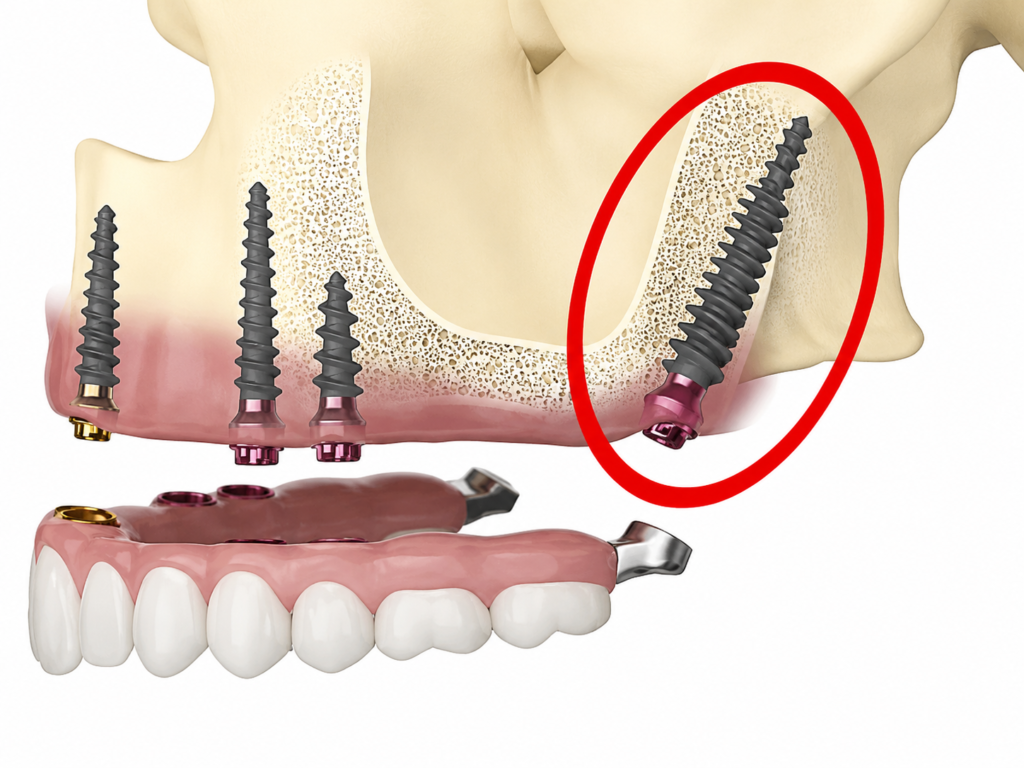
The placement of pterygoid dental implants is a specialized procedure used for patients with significant bone loss in the upper jaw. This technique allows dentists to anchor implants in the pterygoid bone, a stronger area located behind the upper jaw.
At City Dental Clinic, the procedure is carefully planned using modern diagnostic technology to ensure precise implant placement and long-term stability.
Before the procedure begins, the dentist performs a detailed examination of the patient’s oral health. Advanced imaging such as dental X-rays or 3D scans is used to analyze the bone structure and determine the best position for the implant.
This stage allows specialists to create a personalized treatment plan that ensures safe and effective implant placement.
Once the treatment plan is confirmed, the patient is prepared for the implant procedure. Local anesthesia or sedation may be used to ensure comfort during the treatment.
The dental team also prepares the surgical area and ensures that the procedure will be performed under controlled and sterile conditions.
During the procedure, the dentist places the implant at a specific angle so that it reaches the pterygoid bone behind the upper jaw. This bone area is denser and provides strong support for the implant.
Because of the stability of the pterygoid bone, the implant can often support fixed restorations even in cases where the upper jaw has limited bone volume.
After the implant is placed, it begins a process called osseointegration, where the implant gradually integrates with the surrounding bone. This process is essential for ensuring long-term stability.
Depending on the treatment plan, temporary teeth or prosthetics may be placed while the implant heals.
Once the healing process is completed, the final dental restoration is placed on the implant. This may include crowns, bridges, or full-arch prosthetic teeth, depending on the patient’s needs.
The final result restores both the appearance and function of missing teeth.
Pterygoid dental implants provide an advanced option for patients who have significant bone loss in the upper jaw. This technique allows dentists to place implants in a stronger area of bone, making it possible to restore missing teeth even in complex cases.
Key benefits of pterygoid implants include:
Pterygoid dental implants are designed for patients who have significant bone loss in the upper jaw and may not be suitable candidates for traditional implants. This technique allows dentists to place implants in a stronger area of bone, offering an effective solution for restoring missing teeth in more complex cases.
At City Dental Clinic, specialists carefully evaluate each patient to determine whether pterygoid implants are the right option based on their oral health and bone structure.
This treatment is often recommended for patients who have conditions that make conventional implants difficult or impossible.
Common candidates include:
In addition to bone structure, dentists also evaluate the patient’s general oral health and lifestyle factors. Good oral hygiene and healthy gums are important for the long-term success of dental implants.
Other factors that may be considered include:
A detailed consultation and imaging analysis help determine whether this advanced implant technique is the most suitable treatment option.
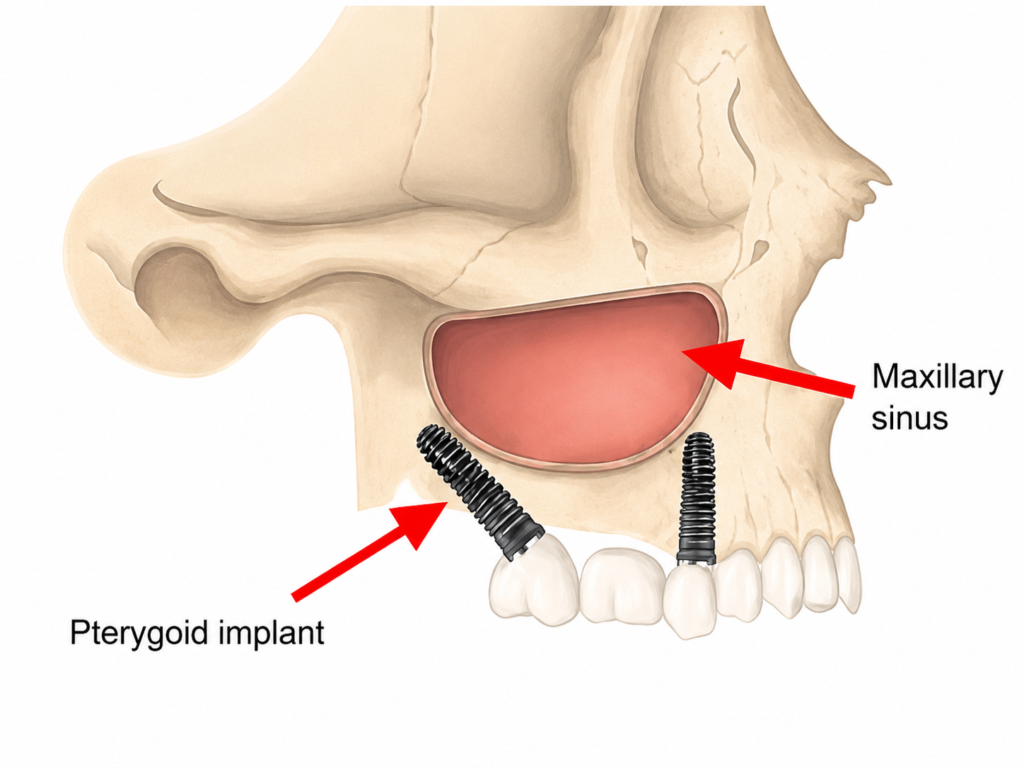
Recovery after pterygoid implant surgery is an important phase that allows the implant to integrate properly with the bone. With proper care and follow-up, most patients experience a smooth healing process and can gradually return to their normal routine.
At City Dental Clinic, patients receive clear aftercare instructions to help ensure optimal healing and long-term implant stability.
In the first few days after surgery, it is normal to experience mild swelling or discomfort around the treated area. These symptoms are usually temporary and can be managed with the medications recommended by your dentist.
During this period, patients are encouraged to rest and allow the surgical area to heal properly.
Common temporary symptoms may include:
The healing phase involves a biological process called osseointegration, where the implant gradually integrates with the surrounding bone. This process is essential for creating a stable foundation for the final dental restoration.
The healing period can vary depending on the patient’s bone structure and overall health, but it usually takes several months for full integration to occur.
Following the dentist’s instructions is key to ensuring a successful recovery after implant surgery.
Patients are often advised to:
By taking these precautions, patients can help ensure that the implant heals properly and remains stable for many years.
If you are considering pterygoid dental implants in Albania, the first step is scheduling a consultation with the specialists at City Dental Clinic. The clinic offers advanced implantology and supports international patients with clear treatment planning and guidance throughout their visit.
Contact the clinic today to discuss your case and receive personalized advice about pterygoid implant treatment.
Contact Information

