
Your smile can be restored with complete mouth restoration, which includes dental implants and several other procedures if you have severe oral health problems. Gum disease and missing teeth are only two of the oral health issues that reconstruction may help with.
What differentiates full mouth reconstruction from smile makeovers is that mouth reconstruction aims to treat serious dental issues while also improving the aesthetic, while on the other hand smile makeovers are optional and only include cosmetic operations.

Typically, the procedure combines general, cosmetic, and restorative dentistry techniques. These treatments can treat cosmetic concerns while also assisting in the restoration of your dental health. Reconstruction may involve fillings, crowns, bridges, dental bonding, dentures, bone or tissue transplants, gum treatment, scaling and root planing, orthodontics, and, of course, dental implants to replace any lost teeth, depending on what you and your dentist, intend to address.
Many advantages come with choosing complete mouth reconstruction, including better speech, easier biting, healthier gums, a correctly aligned bite, better facial structure, protection against tooth decay, and a boost to confidence.
Getting a thorough oral examination from the dentist is the first step towards receiving a full set of new teeth through full mouth restoration. The dentist can decide which treatment options—implants, bridges, or dentures—are best at the initial appointment. The first procedure can be planned once the patient and the dentist have agreed on the course of therapy. Surgery is not necessary for less intrusive treatments like veneers, dental bonding, and dental crowns, but it is necessary for implant-based tooth replacements that replace missing teeth completely.
People who have lost all of their teeth or have significant dental damage to much of their mouth are suitable candidates for full mouth reconstruction. One of the primary goals of full mouth reconstruction is to provide patients who require significant therapy with a smile they can be proud of.
Those who are thinking about a full mouth reconstruction should also be open to the thought of surgery and be able and ready to undertake more invasive treatments. Anyone who experiences dental anxiety should talk to their dentist about it in order to better understand how things work.
Typically, a complete mouth reconstruction starts with a thorough cleaning. In order to ensure that the mouth is healthy enough to support the major treatments needed for restoration, the dentist will address any cavities, bacteria in the gum tissue, or inflammation. The dentist may suggest fluoride treatments, dental fillings, scaling and root planing (deep cleaning), root canals, or—in certain situations—tooth extractions, depending on the extent and kind of damage affecting the mouth. The necessary steps will change when the initial preparations are finished. Some of the procedures included in full mouth reconstruction are:
If your smile is severely impaired and requires a total replacement, you are likely to have missing teeth or teeth that are permanently damaged. if this is the case the good news is that there has been significant advancement in dental implants and they have shown exceptional success rate. They last a lifetime and have a natural appearance.
The dental implant technique is divided into three stages: placing the post first, followed by the abutment, and finally the placement of the crown. The total treatment can take anywhere from six to nine months, with the surgeries spaced out to allow for sufficient recovery time. To help keep your smile intact, you will often be given a temporary denture to wear while the wound heals.

An oral surgeon may perform a sinus lift or bone transplant to restore your facial aesthetics and bone density if damage to the jawbone is a contributing issue. Extra bone is inserted into the jaw during a bone transplant; this bone is often taken from an animal, a donor, or another part of your own body. It becomes fused with the existing bone over time, giving a solid base. Similar procedures are used for sinus lifts, which are performed to the maxillary sinus in the upper jaw.
Dental implant procedures are most frequently paired with upper and lower jaw bone grafting, despite the cosmetic benefits of bone grafting alone. In the event that the jaw is not dense enough bone to support implants, a bone graft will be inserted first. Common bone grafts are a great option for the majority of individuals who otherwise wouldn’t be good candidates for dental implants since they are over 99% successful.
You can be a good candidate for dental crowns if you have some structural and aesthetic damage to your teeth but they are still strong enough to stay on. Dental crowns, which are often made up of porcelain, resemble implants. But they are positioned over natural teeth rather than being surgically inserted into the mouth. Consider them to be tooth-shaped caps that enhance the appearance of your smile while providing structural support.
Your tooth can be a suitable candidate for a crown if it is broken but still securely affixed to the root. Before the crown is inserted, a dentist must treat any tooth decay that has already developed. The dentist could advise pulling the tooth and replacing it with an implant or bridge if the tooth root is broken or damaged.
Multiple crowns that have been fused together make up a dental bridge. It is most frequently used to “bridge” the gaps left by lost teeth by helping to fill them in. This might be inserted in the empty space, for instance, if two healthy teeth surround a lost tooth. Crowns are attached to both sides of the pontic, or artificial tooth. The pontic bridge fills the space left by the missing tooth while the crowns cover the intact or damaged teeth.
Similar to single crowns, dental bridges are often composed of porcelain. For the majority of dental restorations, porcelain is the most resilient, stain-resistant, and aesthetically pleasing material available; as such, it is the material of choice for dentists.
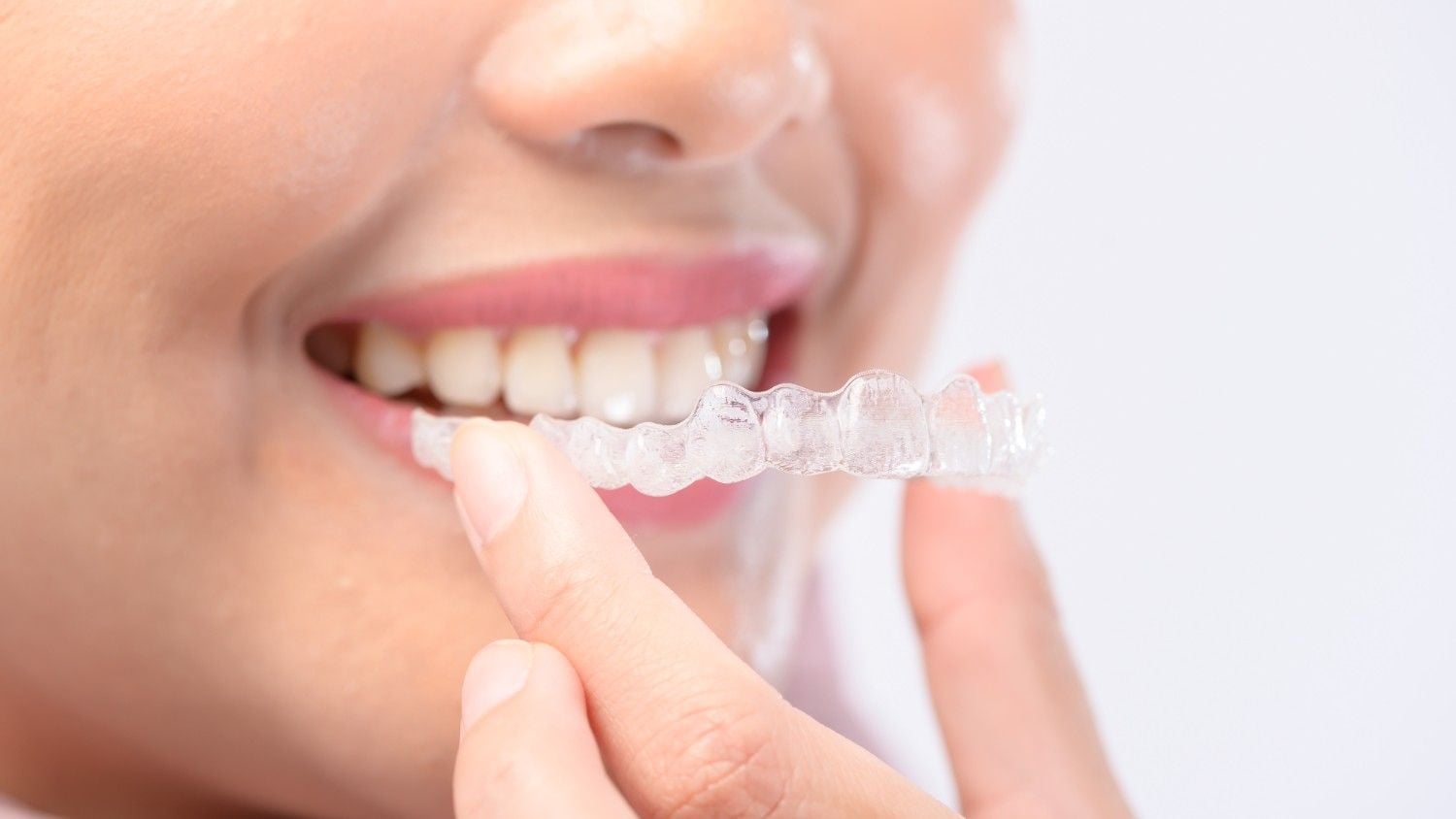
As part of the full-mouth reconstruction, the dentist could suggest braces to patients whose teeth are in good condition but are not positioned correctly. You must have the majority of your natural teeth in place for this procedure. When getting a smile makeover, veneers and other cosmetic enhancements are frequently added after braces.
Conventional braces need up to two years to work and are rather uncomfortable. For this reason, an increasing number of dentists are turning to transparent alternatives like Invisalign. These specially made aligners can be used in as little as 12 to 18 months and are nearly undetectable. Additionally, unlike conventional braces, they are removable as well.
For teeth in good health but with cosmetic imperfections, porcelain veneers offer a great cosmetic fix. A veneer is a very thin layer, often composed of porcelain, that is bonded over the front of a tooth and is crafted to precisely match the color and form of the teeth around it. It can be used to hide a discolored tooth, misaligned teeth, or any other common cosmetic problem.
Dental veneers are often the last procedure used in a full-mouth reconstruction. Your dentist can enhance your smile by treating any residual cosmetic issues once the restorative ones have been resolved. For this reason, porcelain veneers are perfect as they can totally hide even the most noticeable cosmetic imperfections. Additionally, they can endure for 15 or even 20 years before needing replacements if they are made of high-quality porcelain and installed by a qualified cosmetic dentist.
The stages involved in a full mouth reconstruction often take many months to finish. The duration varies according to each therapy and procedure. For example, a year’s worth of more severe treatments may be spread out. On the other hand, fillings and other restorative operations might be finished in one visit. The root planing procedure must be finished before putting in any permanent restorations if you have insufficient gum tissue or need periodontal treatments.

Having a consultation with a dentist is the best way to find out if you are a good candidate for full mouth reconstruction or not. However, by asking yourself questions about your dental and periodontal health, you may get a broad idea of whether or not this is the right one for you.
Replacing teeth can be the first step in reconstructing a whole mouth. When a full mouth reconstruction is performed, all of the teeth inside the mouth are replaced. Patients with several missing teeth are therefore excellent candidates for complete mouth repair. A dentist can replace missing teeth in a number of methods during treatment, including partial and full removable dentures and dental implants.
Teeth that are broken or worn down can also be restored with full mouth reconstruction. Dental trauma, such as an injury to the face, teeth grinding, and poor oral care can all seriously harm teeth. Damage to teeth might also result from infrequent dental appointments. A complete mouth reconstruction is always an excellent option for restoring several broken or worn-down teeth.
Injuries sustained during athletic events, vehicle accidents, and other incidents can cause dental trauma. Following dental trauma, whole mouth restoration is often advised (or required), especially if numerous teeth or gums are seriously injured.
Gum disease that is more serious is called periodontitis. Gum recession, eventual tooth loss, and jaw bone loss can all result from periodontitis development. To restore the patient’s smile and oral health, a complete mouth reconstruction treatment could be required if periodontal disease has resulted in cosmetic or oral health difficulties.
Through full mouth reconstruction, patients who are unhappy with their smile because of various aesthetic and dental health issues can restore their smile in a more affordable and less intrusive manner. Rather than treating one problem at a time, whole mouth reconstruction focuses on how to handle many difficulties in the most effective and efficient method possible.

