
As you might know by now dental implants are the most effective and the best treatment if you are looking to replace missing teeth. In this blog post, we will explain what are the components of a dental implant, the abutment, the fixture, and the crowns. These components can be made of different materials and each of them has its own benefits and drawbacks. Continue reading to understand better how dental implants work and if you are a suitable candidate.
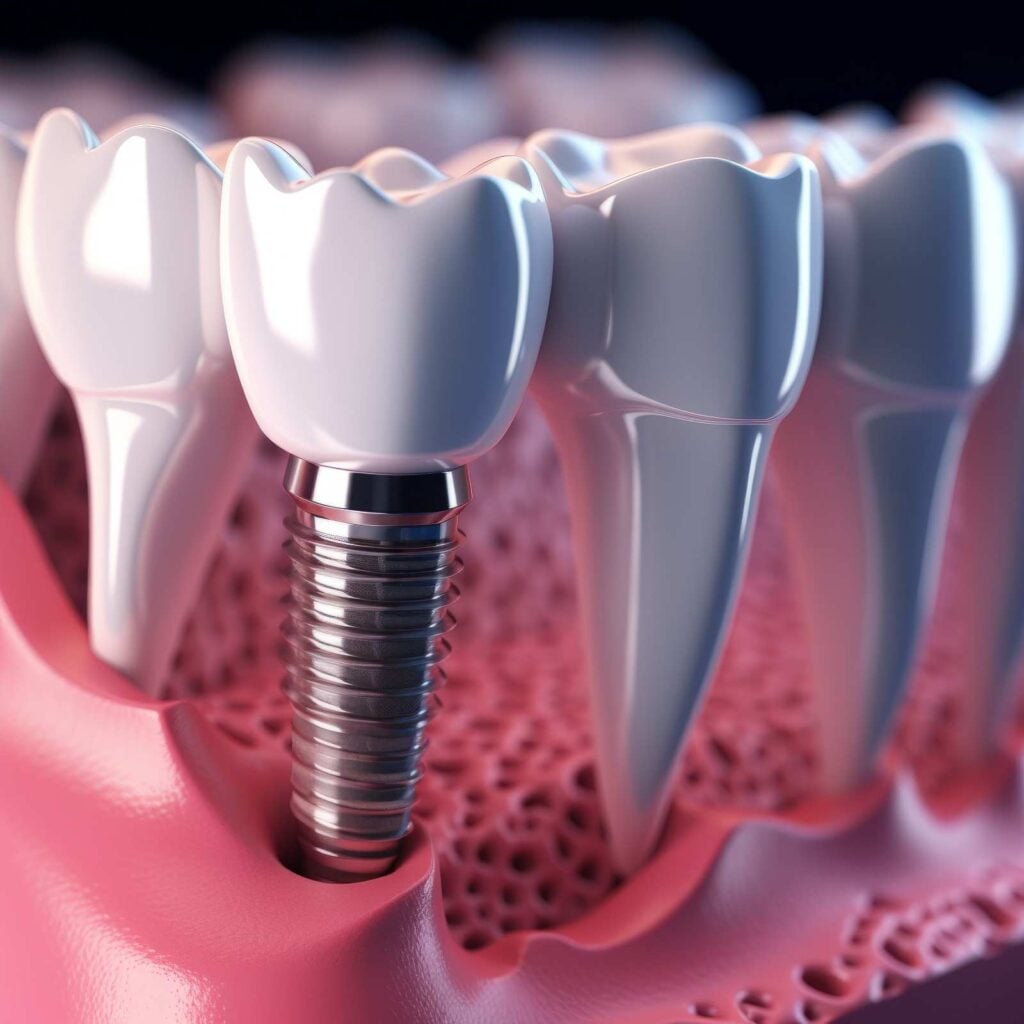
The implant post serves as the missing root of the lost tooth. Made from biocompatible materials like titanium, the dentist will surgically place the post into the jawbone where the root is missing. The procedure is not painful since it will be done under the effect of anesthesia, however, the recovery process can be challenging. The titanium post serves as a great replacement of the roots which will be strong enough to serve as a stable anchor for the whole implant.
After the post is implanted, you need to wait for a while until it fuses with the jawbone. This process is also known as osseointegration. During this waiting period, the bond will become strong and permanent, just like the root of your tooth. Because the implant will be made of titanium which is a biocompatible material, you won’t need to worry about corrosion or rejection from the body.
The abutment is attached once the implant post is completely in position and has fused with the jawbone. The abutment is a connection that rests on top of the implant post and maintains the crown in place.
The aim of this component is to connect the post and crown and create a strong foundation to maintain it. Custom-shaped and angled abutments can guarantee that the crown fits precisely with the neighboring teeth and offers a natural bite. To put it briefly, the abutment serves as a link between the implant post and the crown, guaranteeing that the finished restoration is both aesthetically pleasing and functional.
The material used to make up the abutments can vary and also their design can differ based on their function, the material compatibility, the aesthetic required, and the system used. Furthermore, we will explain the main types of abutments and what their benefits are.
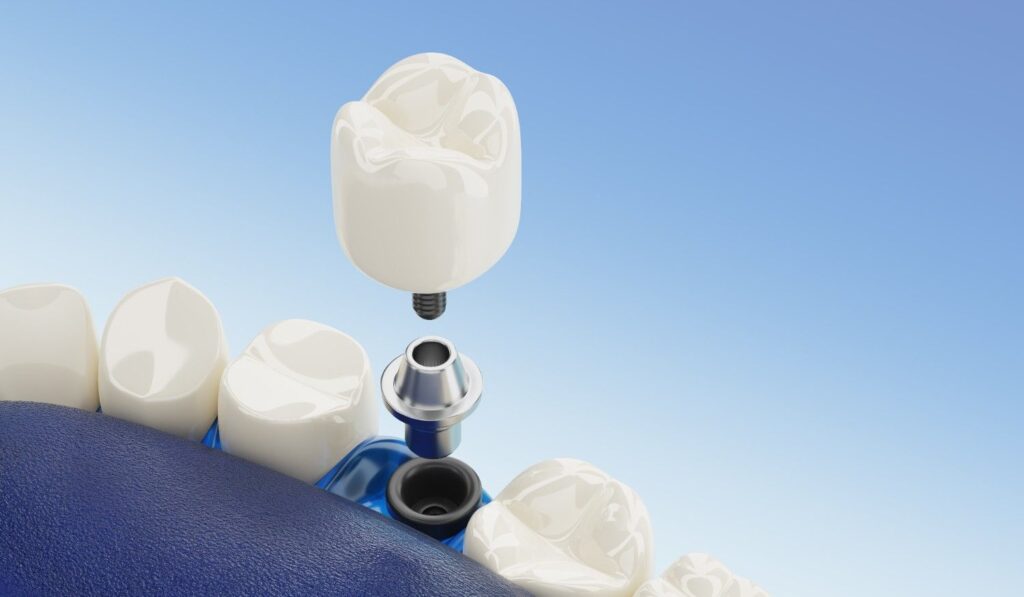
These are pre-fabricated abutments that come in different sizes and forms. They are the “off-the-shelf” alternative for dental implant restorations, offering a quick and affordable fix. However fit and appearance could face difficulties as a result of not being made specifically for each patient. They are frequently used when the implant is positioned in an area like the back of the mouth, where there is plenty of soft tissue covering and little aesthetic concerns.
Each custom abutment is made to match the exact shape of the patient’s gums and surrounding teeth. They are often created after taking an imprint of the implant and the surrounding tissue, in order to guarantee a perfect fit. Better cosmetic results may result from this customization, particularly in the front or exposed portions of the mouth. The ability to customize the abutments can help encourage improved oral hygiene by making it simpler to clean around the base of the crown.
Another type of dental implant abutment is a healing cap. They play an important role and can help a lot during the recovery period. Their purpose is to maintain the gum tissue around the newly placed implant and it will be removed right after the site is healed properly.
When an implant is positioned in a region with insufficient bone density or is not in optimal angulation because of anatomical limitations, angled or angled correction abutments will be used. By allowing the prosthetic tooth to be correctly aligned with the other teeth, these abutments may correct the angle by up to 45 degrees, guaranteeing both functioning and a natural look.
Because zirconia has a color that is similar to teeth and blends in with natural dentition, abutments made from this material will offer a lot of aesthetic advantages. These are especially helpful for replacing front teeth in cases where the thin gum tissue may not properly hide metal abutments. Additionally, since zirconia is biocompatible and resistant to plaque accumulation, it will be a great option for people who are self-conscious about the appearance and condition of their gums.
Titanium is a material of choice for abutments due to several factors including its strength, bone-integration compatibility, and biocompatibility. They will be great for the back of the mouth since the pressure from chewing is greater and the necessity for aesthetic appeal is less required.
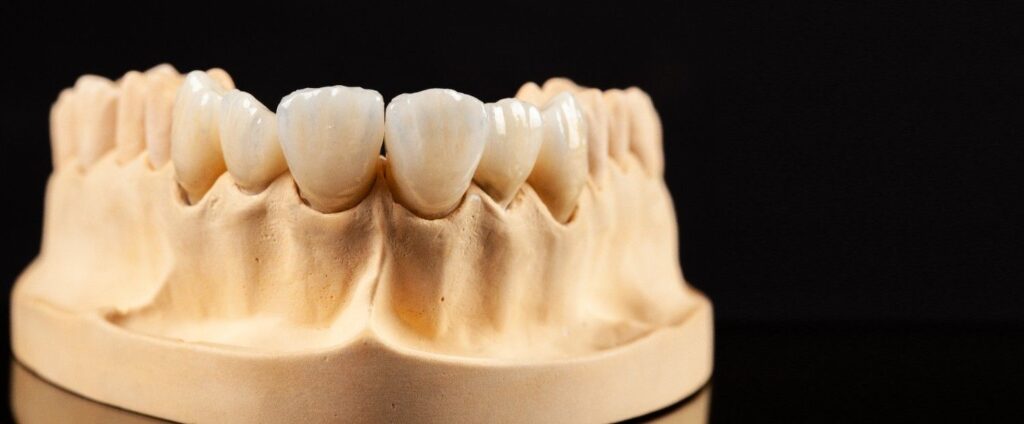
After the dental implants have been installed, the crowns are the final touch. They are designed to look the same as your natural teeth and are placed on top of the abutment. Just like normal dental crowns they come in different materials including ceramics, gold, silver, porcelain, and metal. While ceramics and porcelain provide more aesthetically pleasing results, gold is more resistant to outside factors.
Although the primary distinction between crowns is their material, there are other variations as well. The method in which they will be placed will also have a significant effect. Cement-retained and screw-retained crowns are the two primary varieties of dental crowns used with implants. Let’s examine each one of them in more detail:
One of the most used materials for dental crowns will definitely be zirconia. This material offers a great balance between aesthetics and durability. They will look the same as your natural tooth or maybe even better and also you will be able to eat without worrying if you might damage it since they are very strong.
The rear of the mouth (premolar and molar areas) is the ideal location for solid zirconia crowns. Although the zirconia material is white and available in many shades, it lacks the more translucent quality of real teeth. As a result, to give the teeth a more natural appearance, a more transparent kind of zirconia will be utilized to resurface (veneer) the material used on the front teeth (incisors & canines).
Despite being more fragile than solid zirconia, transparent zirconia is nevertheless supported by a solid zirconia framework. For anterior (front) teeth, the veneered (translucent + solid zirconia) crown is the most visually attractive option because it allows more light to flow through, giving the crown a more natural-looking appearance. Additionally, zirconia has a different chemical response from that of metals, lowering the possibility of allergic reactions.
 Porcelain-Fused-To-Metal (PFM)
Before zirconia became popular, porcelain fused to metal ones were the most requested ones. Dentists consider them very durable and stable for a very long period of time. Also when it comes to appearance they will be great since they will look the same as your natural teeth.
However, sometimes they are not recommended for use on the anterior (front) teeth because the metal base can occasionally be seen as a dark line along the gum line of the tooth. As the name implies, titanium, nickel, cobalt, and gold are among the metals used to make the basis of these crowns. Their power comes from this. Porcelain is applied over this metal foundation to give the crown a realistic, tooth-like look.
With a look that is extremely similar to real teeth, E-max’s lithium disilicate glass-ceramic foundation is incredibly strong. If a patient doesn’t have a hard bite that may break the crown, it might be appropriate. This material is mostly used in veneers and that’s why it is more fragile than other options. When used in rare teeth they can break during eating since they are not very strong and when used in the front it can be difficult to match them with the other teeth. This is one of the main reasons why E-max crowns are not very recommended by dentists.
Typically, gold crowns include elements of palladium, chromium, or nickel with gold. The crown becomes stronger and is much less expensive when an alloy is used. Because of their extreme strength and resistance to chipping and breaking, gold-plated items don’t corrode easily. They also keep a very high polish, which extends their lifespan by making them simpler to maintain and clean. Because of its unusual look, gold is obviously not a material that is often used for anterior (front) teeth. Although pricey, it is still a great option for posterior (back) teeth.

