
Sinus lift is a surgical dental procedure that aims to increase the amount of upper jawbone, usually before the dental implant placement. This procedure is necessary when the density of the existing jawbone is not sufficient to hold the implant safely and effectively.
Many patients don’t feel thrilled when they learn about the sinus lift procedure, but in reality, this is a common procedure, highly effective and with a manageable recovery process. Furthermore, you will find everything you need to know about this treatment, starting from its purpose to the recovery timeline.
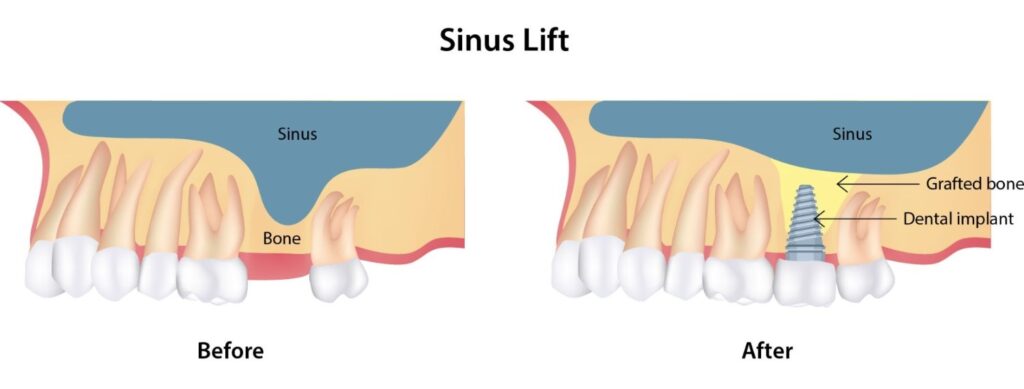
Sinus lift, also known as sinus augmentation, is a dental surgical procedure that aims to add jawbone to the back area of the upper jawbone, usually on the molar and premolar area. This is done by lifting the membrane that separates the sinus cavity from the jawbone and placing bone material in the created space.
The main purpose of this procedure is to offer enough bone volume to support the dental implants effectively and safely. Sinus lift procedure won’t affect breathing or sinus function, since it is focused on building a bone mass underneath it, to prepare the area for the dental implant placement.
Dental implants are the most effective and long-lasting solution for replacing missing teeth. However, to be functional and durable, an implant requires a strong bone base on which to be placed.
In many cases, especially on the upper jaw, patients deal with jawbone loss that makes implant placement impossible. This happens due to natural bone resorption after losing a tooth and due to its proximity to the maxillary sinus cavity.
When a tooth is lost, the bone around it starts to gradually deteriorate, since the necessary stimulation from chewing is no longer present. As time passes, this area continues to get weaker and lose its volume, not offering the necessary stability for the dental implant placement. The upper jaw has a softer and more porous structure than the lower jaw, which makes it more sensitive to loss of jawbone.
Besides jawbone resorption, another factor that affects it is the position of the maxillary sinus, which is an air cavity that is located above the molars and premolars located on the back of the jaw. After losing one or more teeth in this area, the sinus has the tendency to get bigger, making the distance between the sinus and the outer part of the jaw become smaller and smaller.
A sinus lift is necessary in this case, since it allows the creation of a new area with sufficient jawbone for the implant placement in the correct position. Without this procedure, the implant would not be secured and would be almost impossible to place, so this procedure is not only a technical preparation but a necessary step to guarantee the long-term success of the dental implants.
Sinus lift is a necessary procedure when the patient doesn’t have enough jawbone in the back area of the upper jaw, where the premolars and molars are created. This usually happens due to natural resorption of the jawbone after tooth loss, especially if this has happened years ago.
Over time, without dental roots to stimulate the jaw during chewing, the body begins to resorb nearby bone. If the amount of bone is too small, it cannot securely hold a dental implant, and its placement without additional intervention may fail.
Another important reason why sinus lift is necessary is the natural expansion of the maxillary sinus after tooth loss. Without the normal pressure from the tooth root, the sinus membrane will begin to drop, weakening the jawbone even more. This increases the risk that the implant goes through the sinus space, which is unacceptable from a medical point of view.
The sinus lift procedure allows the movement of this membrane towards the surface, creating a space where the extra bone material can be placed to create a strong foundation for the dental implant placement. This way, the sinus will be protected and the implant will have enough stability to function successfully.
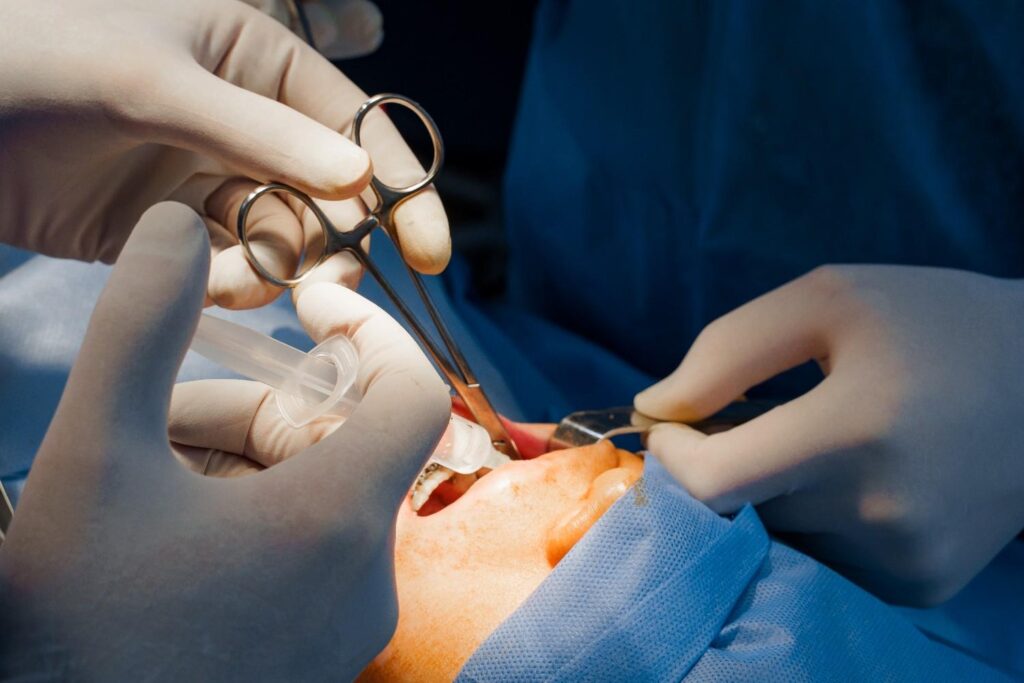
The procedure will start with a complete assessment of the bone structure and the position of the maxillary sinus. The dentist or dental surgeon will use panoramic images or 3d scans to measure the height and width of the bone in the area where the implant will be placed.
These images help identify the areas where the jawbone density is lower and in assessing the distance between the sinus and the space where the surgery will be performed.
In this phase, the dentist will also decide the type of sinus lift that will be performed – open technique or closed – and if the implants can be placed on the same session, or a second session will be necessary after the bone has healed.
Before the dentist starts the procedure, local anaesthesia will be administered to eliminate any pain or discomfort during the treatment. In cases when the patient is feeling very anxious or scared, sedation may be recommended, making the experience calmer and easier to deal with.
The procedure is not painful, but it can last about 45-90 minutes, so this is why it is important for the patient to feel calm and relaxed all the time.
After anaesthesia, the surgeon will make a small incision on the gum line in the back area of the jawbone, in the area where the teeth are missing. This gives access to the jawbone. Carefully, the dentist will create a small window on the bone where the sinus lift will be performed.
This is a very delicate step and requires maximum precision to avoid damage to the surrounding structures.
During this phase, the dental surgeon will aim to find the membrane that separates the maxillary sinus cavity from the jawbone. This membrane is also known as the Schneiderian membrane and is extra thin and sensitive.
Using special instruments and careful movements, the membrane will be carefully lifted from the back of the sinus to create a new space underneath it. This is one of the most important steps, since the membrane damage can complicate the procedure and postpone the dental implant placement.
After the membrane has successfully been lifted and the new space has been formed, the bone material will be placed to rebuild the bone base. This material can either be a natural bone donated from the patient himself (Autografts), donated bone, synthetic material or a combination of them.
The goal of this procedure is the stimulation of the natural bone in the area, creating a stable foundation for the dental implant placement. The amount of material that will be used will depend on the available space and the height required for the implant.
Once the bone material is placed successfully, the surgical site will be carefully closed. The surgeon will reposition the gums and close the area using fine and absorbent stitches.
The patient will take detailed instructions after the procedure, including the use of medications, avoiding blowing the nose and stopping activities that can increase the pressure on the sinus area. Usually, the dental surgeon will recommend a visit to the dental clinic after a couple of days. The recovery period can last for a couple of months before the implant is placed.
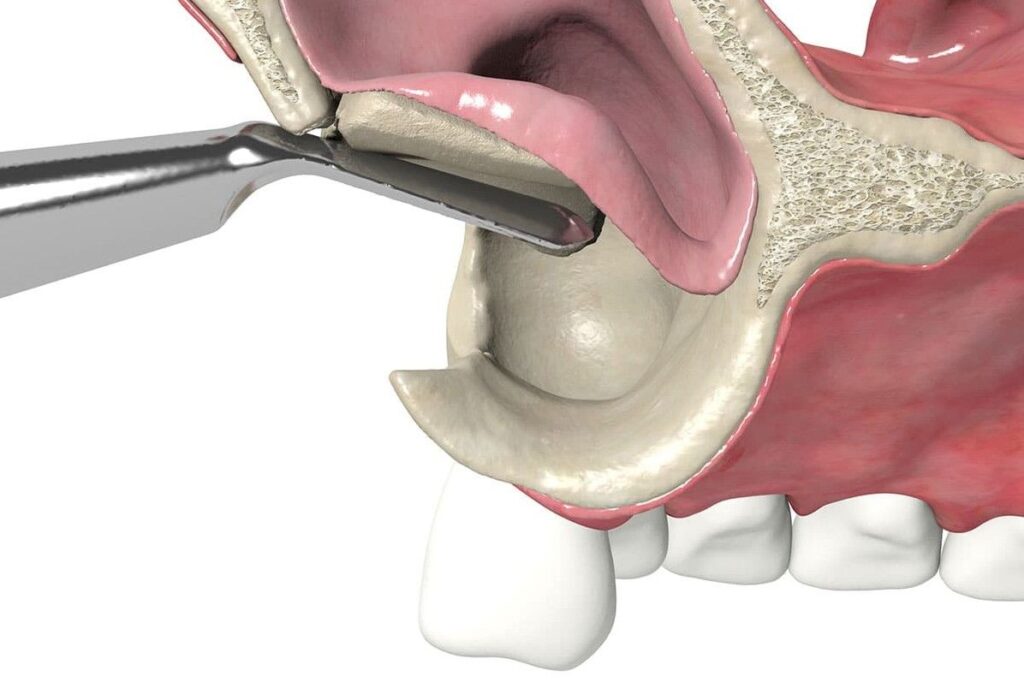
The open sinus lift technique is the most commonly used method when the bone loss is more prominent, usually less than 4 mm. The procedure will be realised through a small opening on the outer part of the upper jawbone, in the area where the implant will be placed.
Through this “ window”, the surgeon will carefully lift the sinus membrane and place the bone material in the newly created space.
This technique is more invasive when compared to the closed sinus lift technique, and it requires a longer recovery period –usually 6 to 9 months – before the implant placement. However, it offers precision and high volume of bone augmentation, making it ideal for cases with significant bone deficiency.
As long as the procedure is performed by an experienced dental surgeon and the patient carefully follows the aftercare instructions, the chances for successful results are higher.
This technique is used when the patient has a moderate amount of existing jawbone (usually more than 5mm), which is almost enough for the implant placement.
Instead of creating a lateral opening in the bone, the sinus lift is done through the site where the implant itself will be inserted, by lifting the membrane with special instruments, in line with the implant axis.
The main advantages of this procedure are that it is less invasive, requires less recovery time and in most cases, the implant will be placed on the same session. This will significantly reduce the overall treatment time.
However, the closed sinus lift will not be recommended in cases when the jawbone is very thin, since the risk of membrane damage is higher and the optimal amount of bone for a stable implant may not be provided.
Recovery after a sinus lift procedure will depend on several factors, including the technique used, the amount of bone material and the way the patient reacts to the treatment.
Usually, patients who go through with a closed sinus lift will recover faster, and after just a few days, the dental implants will be placed.
In cases when the open sinus lift is performed, the recovery takes longer, and it usually takes 6 to 9 months before the implants can be placed.
During the first few weeks after the procedure, the patient will experience some normal symptoms such as light swelling, feeling of pressure on the cheeks, minimal bleeding or moderate discomfort. These signs are normal and are easily managed with prescribed medications by the dentist.
The patient will be recommended to avoid blowing the nose, not apply pressure on the treated area and maintain a soft food diet for a couple of days. This will help avoid complications and promote an easier recovery. Regular dental check-ups after the procedure are also necessary to make sure everything is going according to plan and that the bone is integrating successfully.
Just as with any surgical procedure, the sinus lift also carries some risks and possible complications, even though they are rare when the procedure is performed by a experienced dental surgeon. One of the most common risks is damage to the sinus membrane during the lift.
If this happens, the procedure should be stopped and postponed once the membrane is healed. In other cases, a local infection or inflammation can occur, which will need to be treated with antibiotics and medical intervention.
Other complications include constant pain, excess swelling, unusual bleeding or the fall of bone material from the placement site. In some rare cases, the material might even migrate inside the sinus cavity, which requires additional procedures to be corrected.
Patients who suffer from chronic sinus issues or have a history of common infections in the area should be carefully assessed before the procedure. However, if after-care instructions are carefully followed and regular check-ups are attended, most patients will go through the recovery period without any complications.

Recovery after a sinus lift will be calm and complication-free if the patient carefully follows the dentist’s instructions. Maintaining healthy habits and avoiding actions that increase the pressure on the sinus are the key to a successful recovery. This advice not only helps ease common symptoms but also prevents further complications.
For a faster and safer recovery:
Dental implant placement after the sinus lift will depend on the procedure used and the amount of jawbone density before the procedure. If the closed sinus lift is performed and the patient has enough bone, implants may be placed immediately, on the same surgical session.
In cases of an open sinus lift, when a bigger amount of bone material is grafted, it is recommended to wait 6 to 9 months for the bone to integrate and be completely stabilised. Only then will the implant be securely placed and remain stable for a long time.

