
Many people consider gum recession an issue that only affects the appearance of the smile. In reality, this serious health issue can affect the function, stability, and durability of the teeth.
Gum recession is not only an “imperfection” but a warning sign that shows that the supportive tissues are damaged.
In this article, we will discuss what gum recession is, why it happens, what the risks are, treatment methods, and the best way to prevent it effectively.
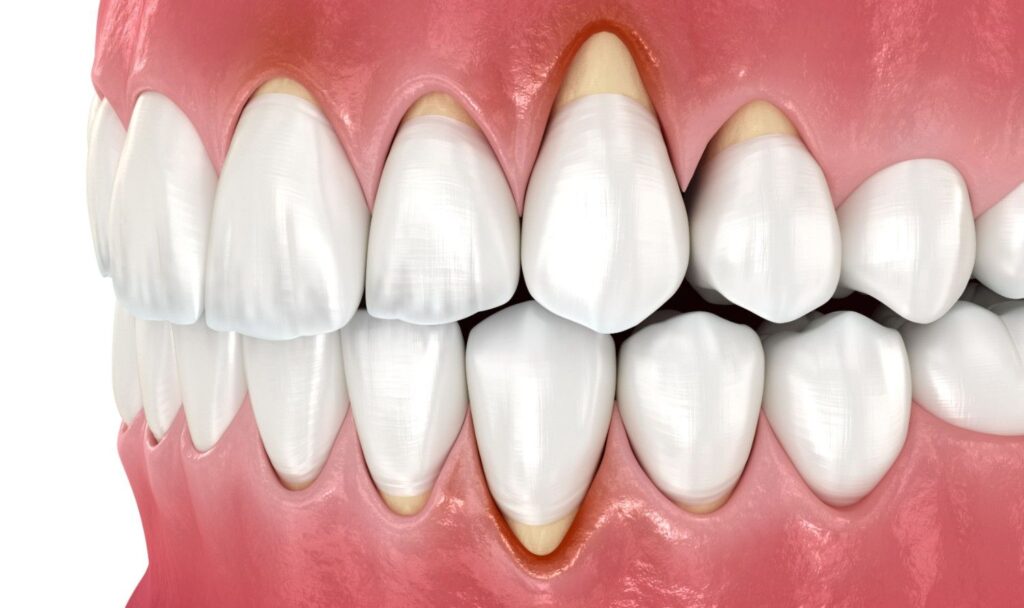
Gum recession is a condition in which the soft tissues of the teeth start to recede from the tooth surface, exposing the root.
This exposure is not only painful, but it also leads to sensitivity to cold, ho, and touch, but also increases the risk of tooth damage in the root area – an area which is usually protected.
This process can be slow and progressive, and in most cases will not be noticed until the roots are overly exposed. Some people find out randomly dwhilebrushing ththeireeth or during a dental visit.
Others will start to feel the sensitivity while eating cold or hot foods, or while brushing their teeth with a toothbrush.
Gum recession is never the same. In some cases, the recession happens on a single tooth, usually as a part of a localised trauma. In other cases, it is spread in several teeth and is related to systemic issues such as periodontal disease.
It can be classified as mild, moderate severe depending on the level of root exposure and the structures that have been affected.
Ajo mund të klasifikohet si e lehtë, e moderuar ose e rëndë, në varësi të nivelit të rrënjës që është bërë e dukshme dhe strukturave që janë prekur.
Gum recession doesn’t happen for no reason; usually, it comes as a result of one or a combination of factors that damage the gingival tissue and make it lose its stability around the tooth. Understanding the underlying causes helps not only in accurate diagnosis, but also in effective treatment and prevention.
Here are some of the main causes:
This is the main case of receding gums. Bacteria in dental plaque produce toxins that cause inflammation of the gums(gingivitis), which, if not treated, will lead to periodontitis. This phase causes damage to the connecting tissue with the bone that keeps the teeth, leading to gum recession.
Aggressive brushing is one of the most common mistakes that people make when trying to keep their teeth clean. Using a hard-bristle toothbrush and harsh brushing will damage the enamel and cause the shifting on gums to shift from their original place.
Excess pressure applied during the night through involuntary clenching or grinding of the teeth will not only affect the teeth but also the supporting structures, such as the gums. As time passes, this will stress the tissues and lead to their recession.
When teeth are crooked or misaligned, it happens that some of them apply more pressure on the gums than others. This uneven pressure leads to soft tissue consumption and recession of specific teeth.
Many people don’t know that these types of accessories may be a direct cause of gingival recession. Continuous collision of the metal with the gums might irritate them and ,as time passes, permanently damage them.
During puberty, pregnancy, and menopause, hormonal changes may cause the gums to become more sensitive and prone to inflammation. This sensitivity makes them more fragile and more vulnerable to recession.
Nicotine will damage blood circulation in the gingivial tissues, slowing down regeneration and creating the perfect envirionemnt for bacterial accumulation. As a result the gums will get damaged and slightly recess.
Even though this is not mentioned, genetics plays a huge role in the width and health of the gums. Some people are born with thinner gum tissue, which makes them more prone to recession even if they take good care of their mouth.

Gum recession is a process that often occurs silently, without any noticeable pain at first. This makes it even riskier, since many people don’t pay attention until the problem has become serious. However, the brain gives us some signals that should not be ignored. Being aware of the symptoms early is the key to preventing further damage and maintaining mouth health.
One of the most noticeable signs is that teeth start to look longer than usual. This ddoesn’thappen because the tooth has grown longer, but because the gum that covers the tooth has receded. Root exposure can be partial or full and is usually accompanied with high sensitivity.
When the root of the tooth gets exposed, it is more sensitive than the enamel. Cold foods and beverages, hot, cold, and the pressure from the brush while brushing can lead to severe and unpleasant pain.
If you notice blood in the sink after brushing your teeth, this is a clear sign of inflammation or damage to the gums. Recession is usually accompanied by chronic gingivitis, which makes the tissue more fragile and sensitive.
In the early stages, you may sometimes feel a strange sensation in a certain part of your mouth, as if the gum is “moving” or there is a slight tension. This sensation occurs due to the stretching of the gum tissue or its changing position.
The smile might not be symmetrical anymore. The once symmetrical lines now look recessed, uneven, or have gaps between. This change is usually visible in pictures when comparing them to the actual condition.
When the roots get exposed and bacteria accumulate under the gum line, small infections might develop, constant bad breath, and a bitter taste in the mouth. These are clear signs that the bacterial flora is not balanced and something is not write.
In the most advanced phases, the loss of gingival tissue and bone leads to shifting of the teeth. This happens due to the loss of inner suppor,t and it is a urent sign of a professional intervention.

Gum recession is not a superficial issue. It will directly affect the foundation of oral health. The gums are a part of the teeth’s supportive system and play an important role in maintaining their stability, protecting them from bacteria, and keeping the mouth healthy and functional. When they are damaged, the effects will go beyond the appearance.
Different from the tooth crown, the root is not protected by the enamel. It is more sensitive and fragile to bacterial and acidic attacks. If the root remains exposed for a long time, deep cavities will develop that will advance quickly and will be more difficult to treat. This leads to chronic sensitivity and requires deep root treatments or dental crowns.
Gum recession often goes hand in hand with bone loss around the tooth. This process damages the structure that keeps the tooth in place, causing it to move and shift. In the beginnin,g the shift is minimal, but as time passes this can get worse and also lead to tooth fall.
People with receding gums usually experience severe sensitivity to cold, hot, and touch. Foods such as ice cream, cold food,s or hot coffe can become a source of pain. Even brushing the teeth becomes more difficult and painful which reduces the motivation for regular hygiene – making it worse.
When the gums recede, pockets between the gums and teeth are formed. These pockets are the ideal place for the bacterial plaque to accumulate, which cannot be removed with regular teeth brushing. As time passes, this leads to deep inflammation, infection, and further advancement of the periodontal disease.
Receding gums make the smile look uneven and make patients look old. The teeth will look longer, the natural gum line will disappear, and in may cases shadows or gaps between the teeth will form. For many people this will affect their self esstemm greatly.
Gum recession will not get better on its own. If not treated, it will advance steadily, including more and more teeth and requiring more complex treatments in the future. In the end, this can lead to the need for prostheses, surgical intervention, or advanced implantology.
One of the most common mistakes is that many people suppose that gum recession is something you will notice while looking at it. Even if the change is easy to notice, only a dental professional will correctly assess the condition of the gingival tissue and decide how advanced the recession is.
During the check-up, the dentist will use a periodontal probe, a thin instrument, to measure how deep the pocket between the gums and the teeth is.
In a healthy mouth, these pockets are about 1 –3 mm deep. When the pockets are deeper, this is a sign of the beginning of the recession and loss of supportive tissue.
The dentist will also examine whether the tooth root is exposed, if there is any sign of tooth movement, or if there are any noticeable changes on the gum line. Sensitivity to touch and the presence of inflammation are also important indicators.
Panoramic and intraoral rays help assess the condition of the bone around the teeth. When the gums recede, bone resorption that supports the teeth also occurs – something that is not visible to the naked eye.
A correct image assessment helps decide whether surgical intervention or a specialized treatment is necessary.
In many clinics, detailed pictures of the gums and teeth will be taken to monitor the progress over time. These comparison pictures help understand whether the recession is advancing, if the treatment is working, or if additional intervention is required.
A part of the diagnostic process will also include interviewing the patient regarding their habits: How do they brush their teeth? What kind of toothbrush do they use? Do they smoke? Do they sense any weird feeling? Do they clench their teeth during the night? This information is essential for understanding the cause of the recession and for building a personalized treatment plan.

Treatment for receding gums is not universal, it will depend ont he cause, the level of damage and the overall condition of the mouth. The good news is that dental care has significantly improced and today we have efficient methods not only to prevent the advancement of the recession but also to restore the appearance and function of the gums.
Furthermore, you will find some of the most used and successful treatments for gum recession:
This is the first step of treating gum recession caused by periodontal disease. The dentist will clean the bacterial plaque and tartar below the gum line and smooth out the tooth root to make it more difficult for bacteria to develop in the future. This treatment is usually performed with local anesthesia and in several sessions, depending on the condition of the mouth.
The result: Reduction of the inflammation, preventing the advancement of the recession, and creating a healthy base for tissue regeneration.
Laser is used to disinfect the gingival pockets and to stimulate the regeneration of the damaged tissue. It is less invasive than traditional treatments and offers certain advantages such as minimal bleeding, shorter recovery time, and less pain after the treatment.
It is recommended especially for patients who are scared of classic surgical interventions or those looking for more modern options.
When gums have receded significantly and the root is prominently exposed. A surgical intervention will be used that transfers the tissue from one part of the mouth (usually from the palate) to the affected area. This procedure is known as a gingival graft or tissue transplant.
In some cases, synthetic materials or processed collagen will also be used for patients who don’t want to take the tissue from their mouth.
This procedure will:
In special occasions, gum recession also happens from the excessive pull of the frenulum (thin tissue that connects the lips with the gums). In these cases, the frenulum is cut or the tension is relieved to prevent further recession of the gums.
This process is quick, simple, and offers immaculate results for younger patients or when the recession is local.
If the recession is caused by teeth clenching during the night, the use of a night guard will help spread the pressure and protect the gums from traumatic pressure.
This is not a direct treatment for recession but rather a necessary preventive measure to prevent worsening the situation.
When the position of the teeth negatively affects the spread of the pressure and the support of the gums, an orthodontic treatment such as Invisalign and braces will be recommended. Fixing the teeth position will equally spread the pressure on the teeth and minimize the pressure over the gums.

