
Benign tumors are non-cancerous growths that can form in different parts of the body including the mouth. They do not spread to other areas of the body and they don’t cause pain or discomfort.
They start to form when a group of cells in the mouth area multiply quickly or don’t die on their own as time passes. The good news is that these cells are non-cancerous and are easy to remove.
In this article, we will delve into more details about benign oral tumors including fibromas, papillomas, lipomas, and oral hemangiomas. Usually, they manifest as atypical formations in the mouth that in rare cases cause symptoms. However, these symptoms are not life-threatening cancer.
This being said, it is very important that you visit your dentist as soon as you notice any unusual growing lumps in your mouth. We hope that this blog article will help you understand what benign tumors are, their cause and how they are treated.
When a group of cells in your mouth don’t function properly there is a high possibility that you will develop benign oral tumors. Although these tumors may cause some symptoms they are not life-threatening, so you should not be alarmed.
Benign tumors won’t cause any pain when you touch them and they are usually soft. They come in different forms depending on the type and where they are found. The most common treatment for these tumors will be surgery since it is very effective and it is highly unlikely that they will grow back.
Some of the most common benign oral tumors include:
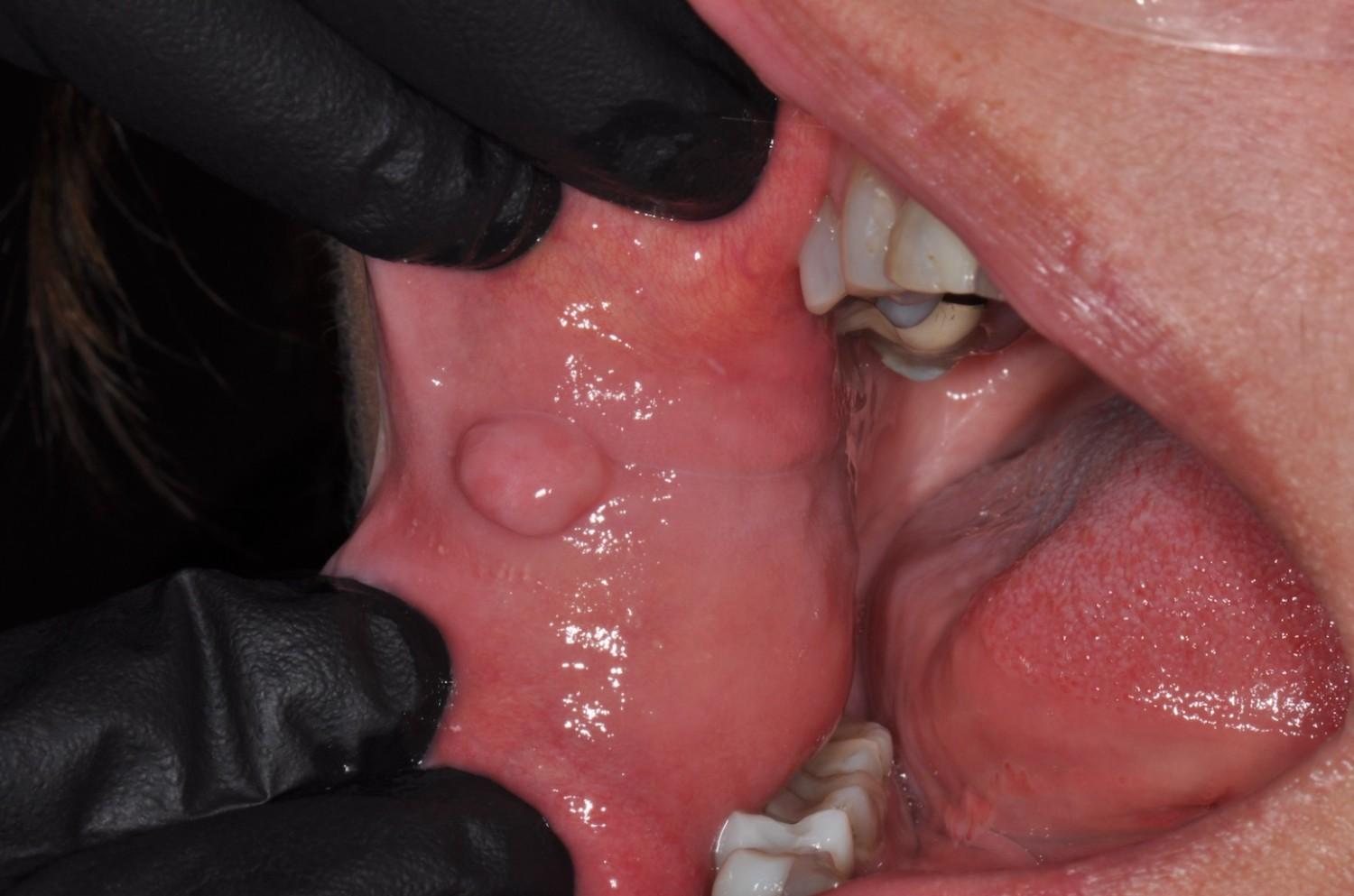
Benign oral tumors are noncancerous growths that develop in the mouth. While these abnormal cell growths do not spread to other parts of the body and are generally not life-threatening, they may still require treatment by a specialized dentist. Common types of benign oral tumors include:
Oral fibromas are noncancerous cells that develop on the inner cheeks, gums, tongue, or lips. They look small, and firm and do not cause any pain.
Usually, the cause of fibromas is constantly biting the cheek or tongue or even irritation from orthodontics appliances. Even though they are harmless sometimes they can cause irritation or discomfort while eating or due to cosmetic reasons. The procedure is simple and it can be performed by an oral surgeon or dentist.
Although oral fibroma can occur at any age it will be more common in adults. The main reasons for this development of cells are:
Oral fibromas look like small solid bumps and can be formed in the soft tissues of your mouth, including the lips. Usually, they are less than 1 centimeter in diameter and they may look the same as the color of your gums or a darker color.
If you touch it the fibroma will feel soft and round without causing any pain. However, if it gets irritated and you bite it repeatedly it will hurt.
Dentists mostly notice that they develop inside of the cheek in the area where the upper and lower teeth meet. However, they may also develop on the inside of the lips, tongue, or along the gum line.
Aside from their appearance and texture, oral fibromas generate no symptoms. Oral fibromas grow over several weeks or months, peaking in size at around 1 cm in diameter, though they can occasionally be bigger.
Typically, an oral fibroma is a single lesion. When several lesions are present, related illnesses such as familial fibromatosis, Cowden syndrome, tuberous sclerosis, and fibrotic papillary hyperplasia of the palate should be taken into account.
It is also important to know that oral fibromas do not turn into mouth cancer.
Firstly the dentist will take a look at the appearance of a small, firm lump, which will most likely be located inside the cheeks, gums, or tongue. They will also ask you about any history of injuries or habits you might have that may have caused this growth.
If the dentist is worried whether the growth is malign or benign, they may even perform a biopsy if necessary. This procedure involves taking a small part of the cell and sending it to the lab for further analysis. Once the results are out they will determine if the growth is a fibroma or not.
The cause and the appearance of the oral fibroma are different so there are different types of it. Some of the most common types include:
Human papillomavirus is a very common disease that has been going around for many years. It does not usually manifest any symptoms in the early stages so regular medical examinations are important.
HPV is mostly associated with genital warts but it is important to know that there are other forms of it. The one we will focus on is oral papillomavirus. Although this virus is not as common it may still cause issues.
The mouth’s immune system, which is particularly sensitive because of the continual exposure to external germs and viruses, often prevents infections without harming the tissue.
Nevertheless, the virus survives and starts to multiply in cells in situations with extremely high viral loads, close contact, or even in the presence of pre-existing abrasions or wounds. This leads to the following symptoms in the mouth or throat:

This type of infection is developed when the virus replicates inside the mucous membranes of the mouth. This will lead to the development of small growths or even painful ulcerative lesions.
These lesions are more uncomfortable than warts in other parts of the body, such as genital warts, since they can become inflamed from frequent contact with food, saliva, or dental equipment. The discomfort can vary depending on the size and location of the warts.
Rarely, more severe side effects like throat cancer might result from certain HPV strains that are known to be oncogenic, or cancer-causing. These are the same oncogenic strains that cause cervical cancer.
If this is the case the treatment will be more complex and challenging. Although possible these severe outcomes are not common in these cases so there is no need to worry.
Also when compared to genital HPV, oral HPV will not be as common. This is due to the fact that our mouth has a better ability to fight infections and prevent bacteria. It is very important to have a good immune system because it will help fight diseases and reduce the likelihood of HPV progressing into a more serious condition.
This being said it is very important to work on your immune system if you want to have a healthy mouth. This will not only help you avoid the infection but will also reduce the chances of it developing in throat cancer, which can be life-threatening.
The symptoms of oral papillomavirus will depend on the patient and the severity of the infection. Although, in most cases, there won’t be any visible symptoms, when they show up they manifest as:
Another type of benign oral tumor is an oral lipoma. This tumor is composed of fatty tissue and can be located in every part of the mouth but usually, it is more common to develop in the inner cheeks.
Lipomas usually are soft when compressible to the touch and have a yellowish color with a smooth surface. Typically once they develop they will continue to grow as time passes.
Though their precise cause is undetermined, oral lipomas are believed to be caused by an excess of fat cells growing inside the mouth tissues. Generally, lipomas develop when fat cells grow out of control, creating a lump or tumor.
Oral lipomas can form as a result of a number of reasons, such as a genetic predisposition, damage to the soft tissues of the mouth, and irritation or persistent inflammation.
Several studies have also shown that oral lipomas can be caused by metabolic disorders or obesity since they are composed of fat tissue. Besides this, it is important to know that the precise cause of oral lipomas is not certain and this condition is very rare.
As we mentioned before, oral lipomas do not cause pain in most cases and they are usually soft and smooth. This is the reason why it can be difficult to detect them.
The size of the lumps can vary from smaller to larger masses that can become more prominent with time. When they grow they can cause irritation and pain while speaking, eating, and chewing.
Although they are not cancerous, if you notice any signs of lipoma in your mouth it will be a good idea to have it evaluated by a dental professional. This way they will rule out any other conditions and focus on treating the lipoma.
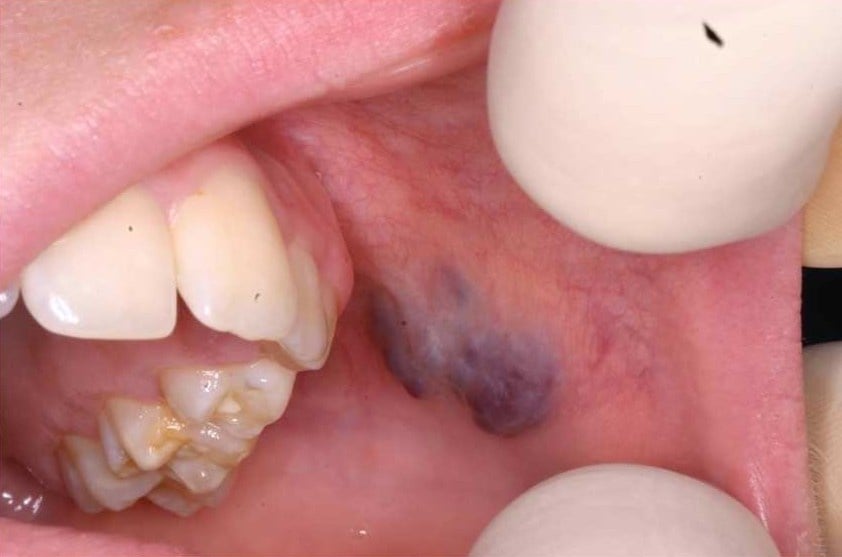
Unlike other benign oral tumors that we mentioned early on, oral hemangiomas are vascular tumors that are composed of buildup of blood vessels. Usually, they will be present since birth or will develop in the early years of childhood but also in adults.
These growths will be found on the lips, tongue, gums, or inside the cheek area. Their size will vary, sometimes they can be small and unnoticeable and in other cases, they can be bigger and interfere with our normal oral functions like eating or speaking.
Although oral hemangiomas have developed since birth, it is still not clear how they are formed. Usually, they will grow rapidly and as time passes will shrink on their own. Some of the contributing factors to these tumors can be:
Although the exact reason for the formation of oral hemangiomas is not certain, mostly they are not harmful and won’t cause any issues. In young children, these growths will resolve on their own so no treatment will be necessary.
Because oral hemangiomas are composed of blood vessels, they usually appear as either blue, red, or purple-colored tumors or masses. The depth of the hemangioma might affect the color intensity; superficial ones seem brilliant red, while deeper ones may appear more blue.
The size of these benign tumors will vary and when you touch them they will be soft. In most situations, hemangiomas are harmless, but if they become too large, they might interfere with normal oral activities including chewing, swallowing, or speaking. In rare cases hemangiomas can occasionally become ulcerated, causing pain or bleeding.
Since they shrink on their own, hemangiomas won’t need medical attention. However in rare cases when they continue to grow and become irritated surgical intervention may be necessary.
The best way to treat oral hemangiomas will be through laser therapy, medications, or even surgical excision. Also, keep in mind that regular checkups with your dentist will be necessary to make sure everything is under control.
Depending on the size, type, and location of the tumor, treatment options for benign oral tumors, including fibromas, papillomas, lipomas, and hemangiomas, usually include surgical excision, laser therapy, or cryotherapy. The most popular and successful treatment is surgical excision, while laser therapy works best for smaller or vascular tumors, such as hemangiomas.
Medications such as beta-blockers or corticosteroids are sometimes used to shrink tumors. In cases where the tumor is tiny and asymptomatic, one possible course of action is to wait it out and see how it turns out. Following treatment, maintaining good dental hygiene, and doing follow-up monitoring are crucial to guarantee full healing and avoid the re-growth of the tumor.
Benign oral tumors are very common, they won’t cause any pain, and symptoms will be minimal. While some of these tumors can go away on their own other ones will need to be treated with medical treatment or even surgical procedures.
However, it is very important to speak to a dentist or a doctor if you notice any changes around your mouth area. After performing the necessary examinations they will decide the best course of treatment. Early detection and treatment of benign oral tumors can be potentially life-saving.

