
The success of the dental implant procedure will depend not only on the quality of the materials or the experience of the dentist, but also on another important factor that is frequently neglected: jawbone density. The area where the implant is placed should be strong and stable enough to handle the everyday biting pressure and to allow the safe integration of the dental implant.
When the jawbone is damaged or has low density, the risk of implant failure will be significantly increased. Due to this, the assessment of the bone density is an important step in every successful dental implant treatment. This article will explain in detail why this factor is so important, how it is measured and what treatments will address the loss of jawbone.

Bone density refers to the strength and concentration of the bone structure in the area where the implant will be placed. The more dense and strong the bone is, the greater its ability to hold the implant in place with stability.
If the bone density is enough, the implant will integrate faster and will better handle the pressure during chewing. This will lower the risk of implant movement, inflammation or implant failure.
In cases where the bone is porous, thin, or damaged, the implant has less natural support. This will lead to a longer recovery time or the need for additional procedures such as bone grafting.
Bone density will be measured through imaging technologies such as a 3d scanner, which gives a clear view of the bone structure in the area. This assessment is essential to determine whether preparation before the procedure is necessary.
For a successful treatment, the assessment of the bone density is not just a technical step, is an essential step of the treatment plan. This will directly affect the longevity and functionality of your oral health.
When the implant is initially placed, it will not be immediately integrated with the bone. This process is known as osseointegration, and it takes time for the bone to accept the implant and connect with it.
The denser the bone, the stronger and more stable the connection. This ensures that the dental implant doesn’t move during the healing process.
In areas where the bone is softer, as in the upper jaw, the integration process will be slower. This requires careful care and usually a longer period for the dental crown to be placed. The density will also affect the initial stability of the implant, which is essential for its success. If the bone is weaker, the implant will fail in the first stages.
Implants placed in dense bone areas can handle everyday pressure more easily and last for a longer time. Due to this, density assessment also helps with the right implant type and shape.
Dentists usually use special methods, such as bone grafting, to improve the low-density areas. This indicates that it is not an insurmountable obstacle; it is just an important factor that should be carefully addressed.
In conclusion, osseointegration is possible even with low bone density, but it requires more time, experience and additional procedures. For a more stable result, every implant treatment plan should start with the bone density assessment.
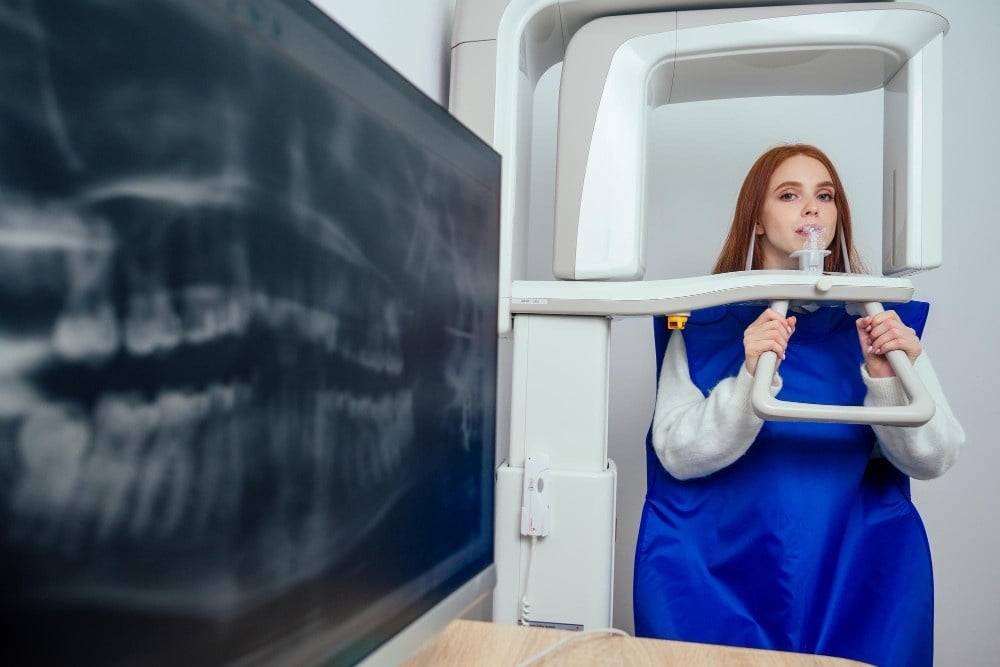
To decide whether the patient has enough bone volume and enough density for the implant placement, the dentist will assess a detailed diagnostic evaluation. This evaluation is the first step towards a successful treatment plan.
The correct method of measuring the bone density is the CBCT (Cone Beam Computed Tomography) scanner. This will offer 3d images of the jawbone, showing the thickness, height and quality of the bone in the area where the implant will be placed.
CBCT scanner measures the bone density with Hounsfield units (HU), classifying the bone from too soft (D4) to very strong (D1). This will help the dentist decide the right type of implant and to decide whether additional procedures are required.
In some cases, density assessment is also performed during the procedure, analysing the sensation of resistance as the bone is drilled. This information helps to adjust the technique in real time.
Thanks to modern technology, the dental assessment will be quicker, less invasive and extremely precise. This will guarantee optimal conditions for the implantation, increasing the chances of long-term success.
When the bone has low density, it doesn’t have enough force to keep the dental implant in place. This increases the risk of implant movement or of it not properly integrating with the bone structure.
In these cases, osseointegration happens more slowly, and it may not be completed. This means that the recovery period will last longer and the treatment will require extra care.
Low density will usually occur on the back area of the upper jaw, where the proximity to the sinus also influences. This makes the use of additional procedures such as sinus lift or bone transplant necessary.
If the implant is placed on a weak area of the bone, it won’t have enough stability, leading to premature failure. That is why, in many cases, dentists recommend first performing a procedure that aims to increase bone mass.
Besides many challenges, dental implants in patients with lower bone density are still possible – they just require more careful planning and specialised techniques. With the right preparation, even patients with low bone mass will benefit from a successful dental procedure.

Bone grafting is a procedure that aims to increase the bone mass in the area where bone volume or density is missing or is very low. This will help reshape the bone structure, creating a strong base for the safe placement of the dental implants.
This procedure uses different sources for the bone material, including: bone taken from the patient himself (Autogenous), from human donors (Allograft), animal-derived bone (xenograft) and synthetic materials created in the lab. The choice will depend on the patient’s specific needs and the treatment plan chosen by the dentist.
The procedure will be performed several months before the implant placement, giving the body enough time to create the new bone around the graft. In some cases, when the conditions are favourable, the transplant and the implant placement will be performed in the same session.
Bone grafting procedure can be used in both the upper and lower jaw, and it is considered one of the safest techniques to improve bone density. With the help of new technologies in the dental field, the process can be predicted and has a high success rate.
Sinus lift is a specific dental procedure that is used when the patient has missing bone structure on the back area of the upper jaw, specifically where the molars are located. The maxillary sinus is closer to the upper tooth roots, and after their loss, the sinus cavity will enlarge, minimising the amount of bone in the area.
During the sinus lift procedure, the dental surgeon will carefully lift the membrane that separates the sinus from the bone and create enough space for the bone material. This helps create a new, stable base for dental implant placement in the future.
Depending on the case, sinus lift can either be performed as a single procedure with a recovery period of 6 to 9 months or in some cases, will be performed at the same time as implant placement. Modern techniques have made this procedure safer, less invasive and with a quicker recovery period.
Sinus lift is an effective choice for patients who otherwise might not have enough bone for an implant. With the right care and professional follow-up, the results will be stable and last for a long time.
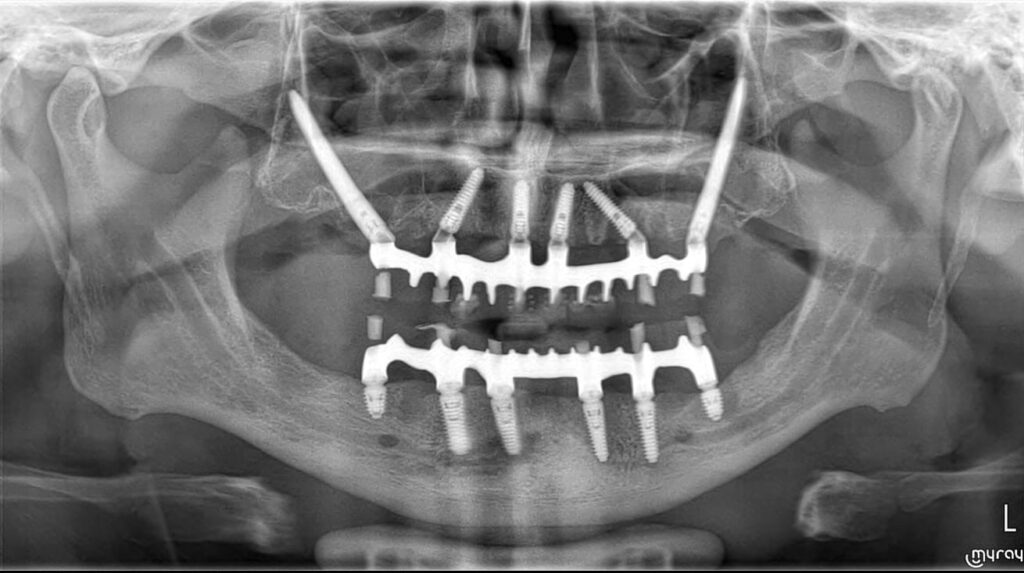
In cases when bone density is lower and it doesn’t provide the necessary stability for a standard dental implant, advanced techniques and special implants will be used. These alternative methods are designed to fit with the complex structure of the jawbone even in difficult areas, maintaining aesthetics and functionality.
Angulated dental implants are usually used when the horizontal bone is not long enough or there is a significant loss in a specific direction. These implants will be placed at a specific angle to avoid sensitive anatomical structures and to get hold of stable pieces of bone where they exist.
For patients with significant bone loss on the upper jaw, zygomatic implants will be an effective choice, eliminating the need for additional procedures such as bone grafting or sinus lift. These implants will be placed on the zygoma bone (cheekbone), offering an extremely strong foundation for a fixed prosthesis.
Another ideal alternative for areas with low density is the use of pterygoid implants, which will be placed on the back area of the upper jaw, benefiting from the pterygoid bone near the skull. They are used in severe cases when there is little to no bone on the upper molar area, and they are very effective in supporting fixed structures without the need for bone grafting.
The choice of implant type is made after a 3D scanner evaluation and careful planning by a surgeon experienced in complex treatments. These specialised solutions have significantly increased the possibility that even patients with weak bone can benefit from dental implants with long-term success.
Age is an important natural factor that will affect the quality and density of the jawbone. As time passes, our bodies will produce less bone mass, and existing structures will start to weaken.
As we get older, tooth loss will most likely be accompanied by jawbone resorption, making dental implant placement more complex. However, this doesn’t make the treatment impossible, but it requires more careful planning.
Medical conditions such as osteoporosis will directly affect the strength of the bone and its ability to maintain the implant. In these cases, a detailed assessment is required and when necessary, the use of additional procedures to make the bone stronger.
Additionally, metabolic diseases, unmanaged diabetes or corticosteroid treatments for a long time will reduce the regenerative capacity of the bone. Patients dealing with these medical conditions will not be excluded from dental implants, but they will be under strict medical surveillance.
With the help of 3d scans and medical analysis, the dentist will decide whether the patient is suitable for dental implants or not. With the right dental treatment and the use of personalised techniques, even age or medical conditions won’t be an obstacle towards your journey to your new smile.

Patients with low bone density should not consider it an obstacle to getting dental implants. With precise planning and advanced techniques, dental implant placement will still be possible and safe.
Here are some of the most important recommendations to consider:

