
Cavities are a very common problem and many people will experience them throughout their lifetime. We know that simply put cavities look like just a hole in a tooth that develop from eating meals full of sugar and starch. In this blog post, we will explain the formation of them step by step and what can be done to prevent them. Let’s start by explaining what factors contribute to it, what are some signs indicating that there is one present and how they will be treated.
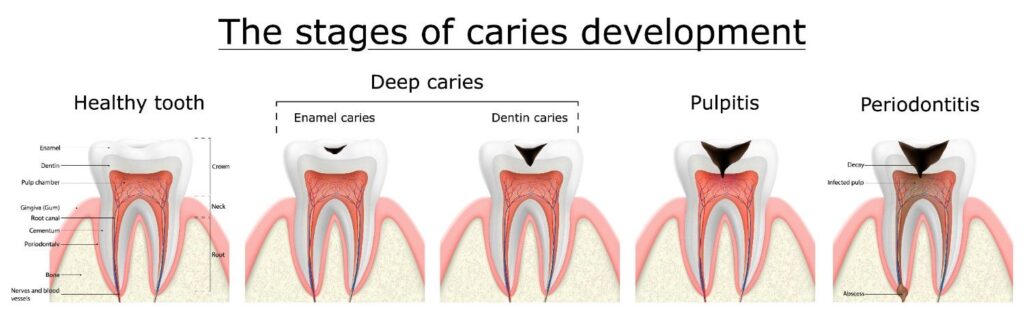
Mainly what you should know is that cavities form as an interaction between the accumulation of food, bacteria, and in some cases even the misalignment of the teeth. Furthermore, we will explain how each one of these factors contributes to the formation of cavities:
The formation of cavities will definitely start with the presence of oral bacteria in your mouth. This bacteria will definitely feed off the carbohydrates, sugars, and acids that are found in different foods that we consume daily. If you don’t have a regular cleaning routine this accumulation will lead to the formation of plaque which is a sticky film located on the enamel.
Dangerous acids that will harm the surface of the teeth will find a home in the plaque. They aim to damage the protective outer layer of your tooth which is called the enamel. Once this happens and the tooth starts to lose essential minerals we enter a process called demineralization. Keep in mind that this mostly happens if you don’t have a proper hygiene routine.
As enamel erodes, tiny holes or weak patches form on the tooth’s surface. These areas of weakness represent the beginning stages of cavities. Spots like this have the potential to develop into more serious cavities if the process is not stopped.
Once the process of formation has started these cavity holes will continue to expand and deepen. When you eat food particles will get stuck causing additional issues to your oral health.

There is definitely a connection between the foods you consume and your oral health, especially when it comes to sugary foods and drinks. This is common knowledge. However, there are some other important factors you should be aware of, that we will explain further on.
A crucial point that all patients should be aware of is that sugar consumption frequency is more significant than quantity. Every time you consume sugar, it gives the bacteria that cause cavities a food supply and produces acidic chemicals. This means that consuming soda or candy as a snack throughout the day is among the worst things you can do for your teeth. To avoid bacteria-feeding sugar buildup in your mouth, it is preferable to eat the dessert and then clean your teeth right away.
Not only can candies, desserts, and drinks increase the development of cavities, but other processed food varieties may also pose a risk. It’s also important to wash your teeth after consuming starchy meals like bread and chips. So, it is important that you restrict these starchy and sugary meals if you want to avoid cavities. After eating, at the very least give your mouth a quick rinse with fresh water if you are unable to wash your teeth.
Besides consuming sugary and starchy foods and drinks there are other factors that may contribute to the formation of cavities. Some of the most common ones include:

Before a cavity forms, there will be several indicators and signs that show they are developing or getting larger. Some of the most common signs that this will happen include:
Persistent sensitivity following the consumption of either hot or cold food may indicate dental caries. The dentin, the hard tissue layer underneath the enamel, may be impacted when the enamel on your teeth begins to erode. Dentin is made up of several tiny, hollow tubes. Foods that are hot, cold, sticky, or acidic can excite the cells and nerves within your teeth when there isn’t enough enamel to shield the dentin. The sensitivity you experience is the result of this.
Persistent toothache is another sign that indicates the creation of a cavity and it is considered one of the most common ones. It may either be a sudden sharp pain or as a result of something you eat. This pain can be located in one area or even all over the mouth and it will be more intense if you bite down on food in that area.
White patches might be the initial sign of staining on your teeth. The color of the stain may darken as the tooth decay progresses. Cavity-related staining usually affects the surface of the tooth and can be brown, black, or white in color which will be very visible even to other people.
As this condition progresses, the white spots will create a hole in your teeth that will be pretty much visible to you and even for others when you speak. You will also be able to feel it if you run your tongue over it. However, there are some cases where the hole will be between the teeth and you will not be able to see it or feel it.
However, the pain will still be felt in the area. If you suspect any of these issues we recommend you call your dentist and set up an appointment. These holes or pits are a clear sign of a cavity forming so it is important to find the right treatment.

The treatment of cavities will differ from case to case and this will mostly depend on the severity and their placement. However, it’s important to understand that when they are caught early on the solution will be easier and the pain will be minimal. When neglected cavities will cause more pain and the restorative procedure will cost much more.
Most dentists will apply a fluoride treatment to cavities that are not as serious. If applied early enough, fluoride can even help reverse the effects of a cavity and repair the tooth’s enamel. The fillings are the next step. Once cavities progress past its first stages, fillings are required. Your dentist will recommend dental amalgam, porcelain, or resins to fill the holes. Your chances of needing a crown increase if the decay is really severe. The top of the tooth is covered by crowns, which shield it from external acids and germs.
If your tooth decay is so bad that it penetrates the inner pulp, you could require a root canal. By extracting the infected pulp, root canal therapy restores the injured tooth. The worst-case situation is finally having a tooth extracted. This occurs when there is no possibility to restore the tooth due to extreme decay. A dental implant may be used to replace the extracted tooth, or you may be left with a gap in your mouth.
Some of the best factors to consider that will help you protect your teeth from the formation of cavities and possible loss of teeth include:
Maintaining your dental health is essential to your general oral health and well-being. Understanding the causes of tooth decay, identifying the risk factors, and being aware of preventative measures will help you maintain the health of your smile for many years to come. The main ways to avoid cavities are to minimize the consumption of sugar, brush with fluoride toothpaste, floss regularly, and eat a diet high in nutrients.
In addition to keeping teeth and gums looking great, routine dental checkups may help identify possible problems before they get worse. Depending on the extent of the cavity creation, several therapeutic options are possible. Our helpful team of experts is here to answer any questions that you may have about oral health and to offer you high-quality advice and support. Make an appointment at City Dental Clinic right away, and we’ll be pleased to assist you in taking great care of your teeth and avoiding the possible formation of cavities.

